 Skip to content
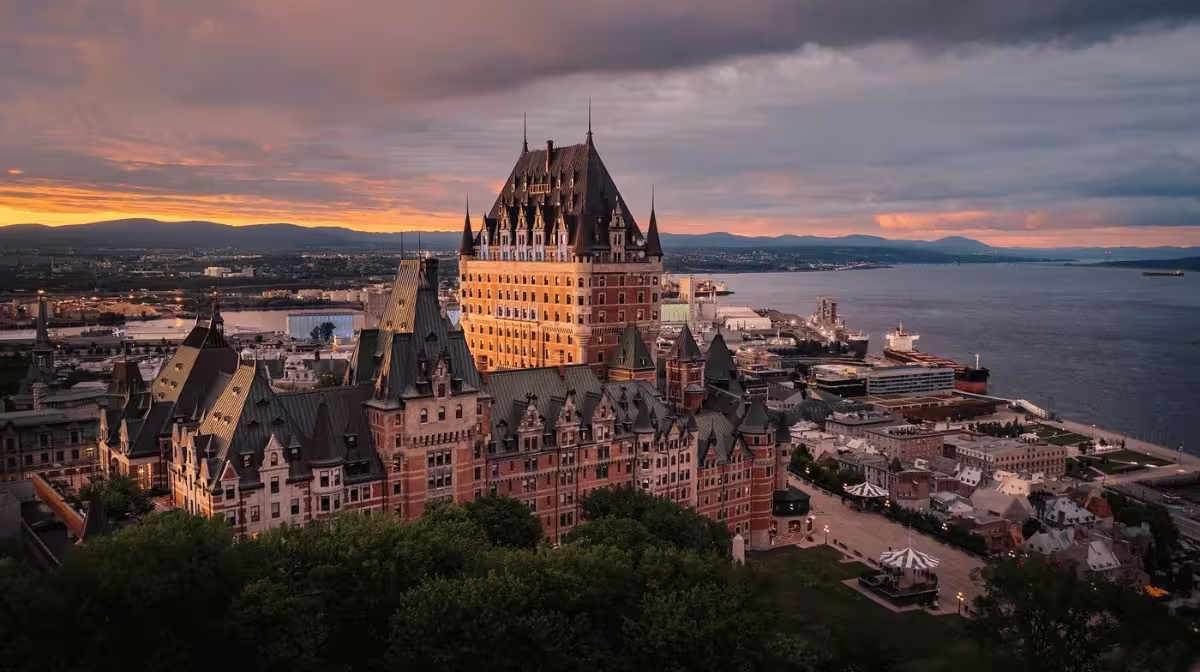
There is a moment, arriving in Quebec City for the first time, when you turn a corner and the Château Frontenac appears above the cliff and you stop walking. It is not a subtle building. It rises from the escarpment above the St. Lawrence like something from a Victorian novel — all copper-green turrets and terracotta brick, a castle that somehow ended up in Canada — and for a few seconds you genuinely wonder whether it is real. It is. It was built in 1893 as a railway hotel, and it has been the defining image of Quebec City ever since. This guide covers the full story of the building and everything worth knowing before your visit.
Affiliate disclosure: This post contains affiliate links. We may earn a small commission if you book through our links, at no extra cost to you.
Contents
Château Frontenac — The Essential Facts
How a Railway Hotel Became an Icon
The Château Frontenac was built by the Canadian Pacific Railway — the same company that had just finished connecting the country from coast to coast — as part of a chain of grand hotels designed to make train travel aspirational. The idea was simple: build hotels so remarkable that people would buy tickets just to stay in them. The strategy worked well enough that several of these railway hotels still define the skylines of the cities they were built in, but none more completely than the one in Quebec City.
The site chosen was the promontory above the St. Lawrence where the original Château Saint-Louis had stood — the official residence of the French and later British governors of New France. The governors’ château had burned down in 1834, leaving the cliff bare. When Canadian Pacific commissioned the American architect Bruce Price to design their Quebec hotel in 1892, he had one of the most dramatically positioned building sites in North America to work with.
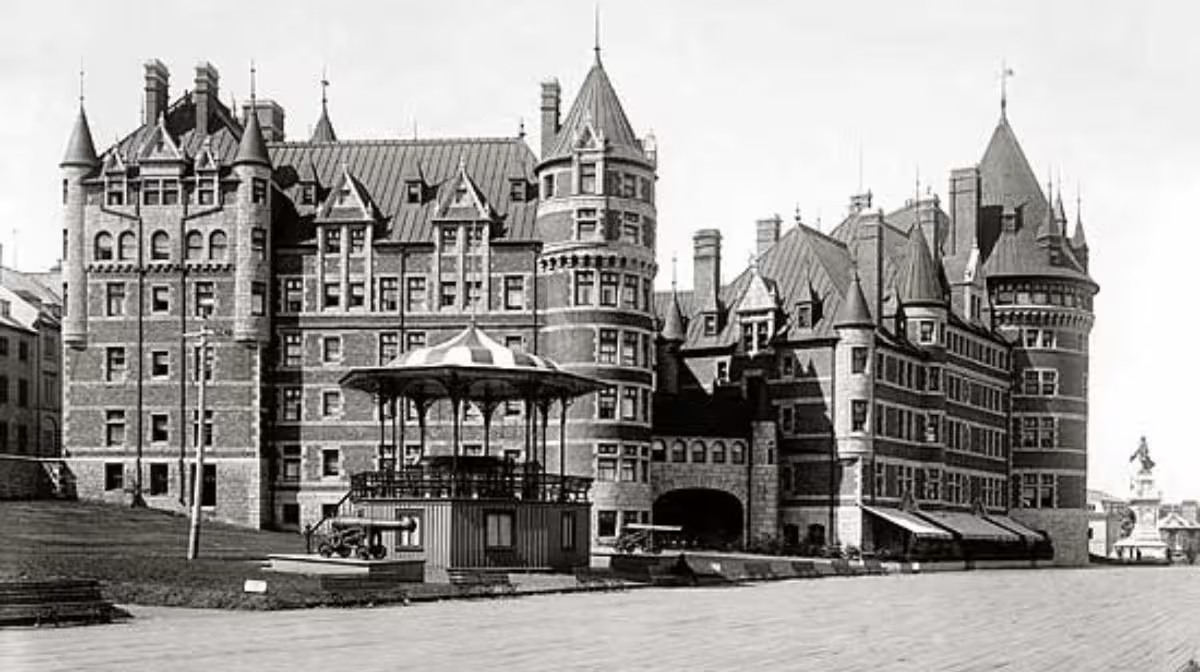
The original building opened in 1893 with 170 rooms — already impressive, but still modest compared to what it would become. Canadian Pacific expanded the hotel repeatedly over the following decades as Quebec City’s reputation as a destination grew. A second wing was added in 1897, a third in 1908, and the iconic central tower that now dominates the skyline was completed in 1924 to designs by William Sutherland Maxwell. By the time the tower was finished, the Château Frontenac had become the most photographed hotel in the world — a distinction it still claims.
The hotel was named after Louis de Buade, Comte de Frontenac, the Governor of New France who had famously refused to surrender Quebec to the British in 1690 — telling the English commander, when asked to deliver his answer in writing, that he would answer only from the mouths of his cannons. A fitting namesake for a building that has refused, across 130 years, to be anything less than the most visible structure for miles.
Chapter TwoThe Architecture
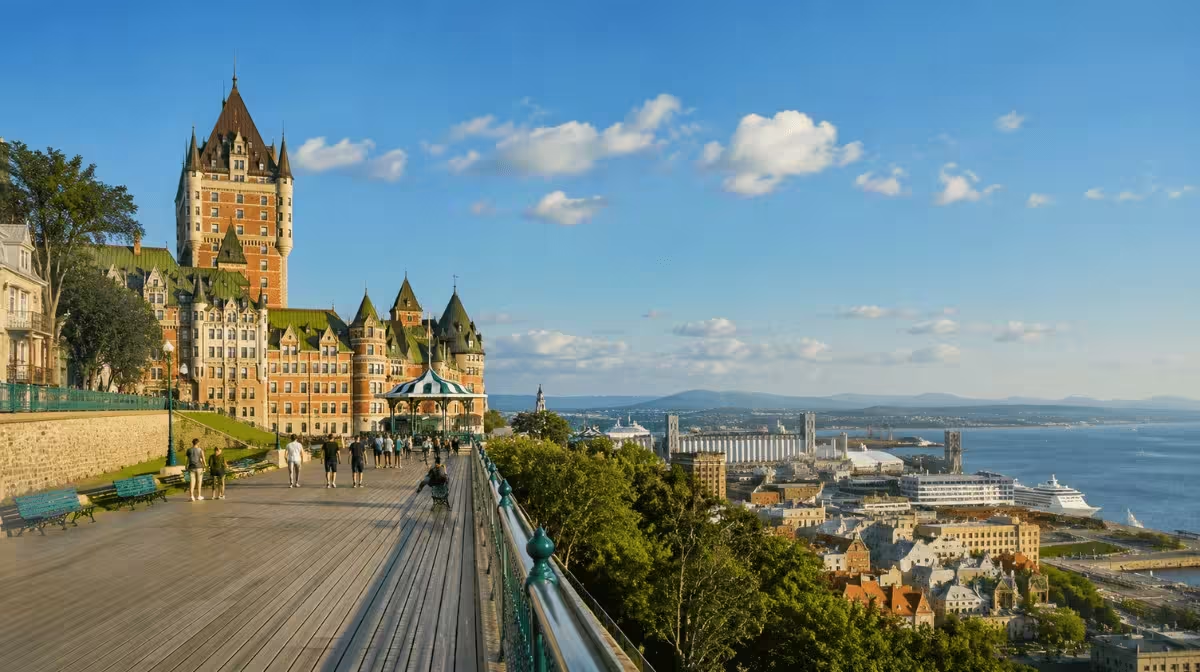
Bruce Price designed the Château Frontenac in the châteauesque style — a form of romantic historicism that drew on French Renaissance châteaux, Scottish baronial architecture, and the kind of dramatic rooflines that announce themselves from a distance. The copper-clad turrets, the steep pitch of the roofs, the terracotta brick, the asymmetrical massing that makes the building look like it grew organically over centuries rather than being designed in a single moment — all of it was deliberate, calculated to make the hotel feel like it belonged to the history of the place rather than arriving from outside it.
What Price understood, and what Maxwell’s 1924 tower confirmed, is that the Château Frontenac is not really a building you look at. It is a building you look from — and one that organises everything around it. Standing on Terrasse Dufferin, the city arranges itself below and beyond in a way that makes sense only because the Château is anchoring the top of the cliff. Looking up from Place Royale in Lower Town, the hotel is the reason the skyline has the shape it has. It is the kind of architecture that stops being a building and becomes a place.
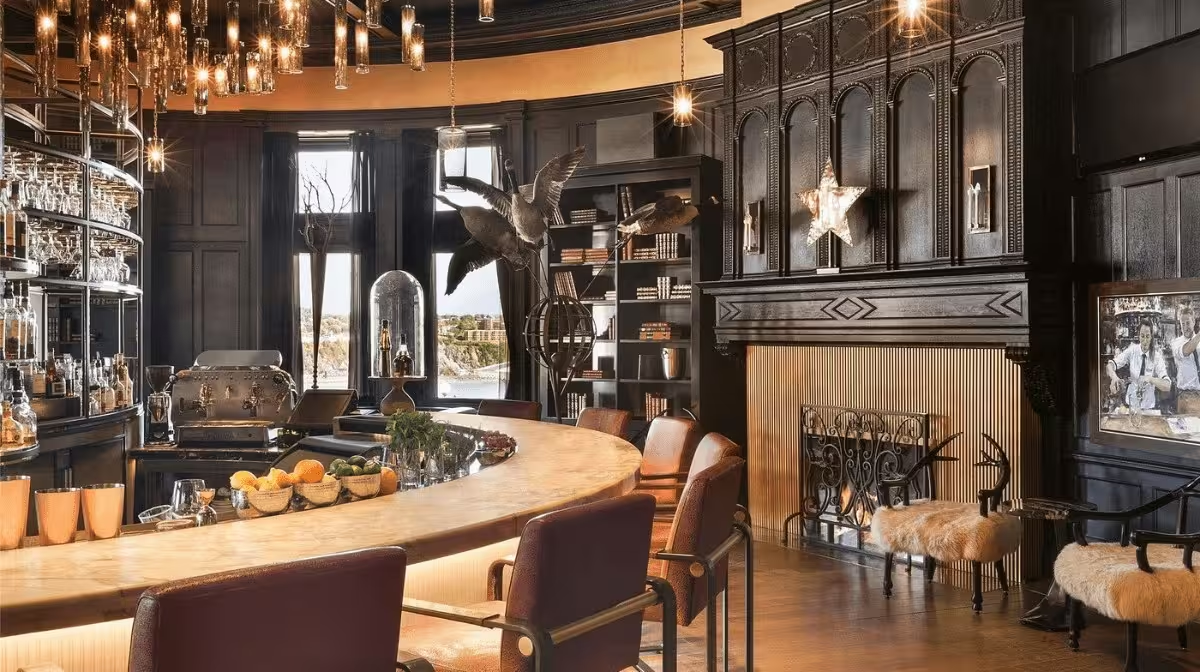
Inside, the public spaces are as theatrical as the exterior promises. The main corridor — the Rue du Château, as it is known — runs the length of the building and is lined with photographs and portraits documenting the hotel’s history. The ballrooms are gilded and high-ceilinged in the manner of the great European hotel interiors. The restaurants look out over the St. Lawrence through tall windows that frame the view like paintings. It is a building that takes its own drama seriously, and earns it.
 Chapter Three
The Wartime Conferences
In August 1943, Winston Churchill and Franklin D. Roosevelt met at the Château Frontenac for the first Quebec Conference — a series of high-level Allied meetings that shaped the course of the Second World War. The choice of Quebec City was partly practical (it was defensible, remote from the European theatre, and accessible for both the British and American delegations) and partly symbolic: a meeting of the English-speaking Allies on French-Canadian soil, in a hotel named after the most famous governor of New France.
The decisions made at the first Quebec Conference were significant. The Allies agreed on the invasion of southern Italy, confirmed the cross-Channel invasion of Europe for the following spring, and began discussions on the development of what would become the atomic bomb — sharing research between British and American scientists under agreements signed at the Château. Churchill stayed in the Citadelle across the road; Roosevelt was accommodated in the hotel itself.
A second Quebec Conference followed in September 1944, again at the Château Frontenac, as the Allies planned the final stages of the war in Europe and the Pacific. By this point the outcome of the war was no longer in serious doubt, but the decisions taken in Quebec — about occupation zones, about the treatment of Germany, about the Pacific theatre — were consequential for the decades that followed.
The guided tour covers both conferences in detail, with access to rooms associated with the meetings and archival photographs of the delegations. It is one of the more unusual things you can do in the city — standing in a hotel corridor and being told, credibly, that the shape of the modern world was partly decided in the room behind you.
 The Visit
The Guided Tour
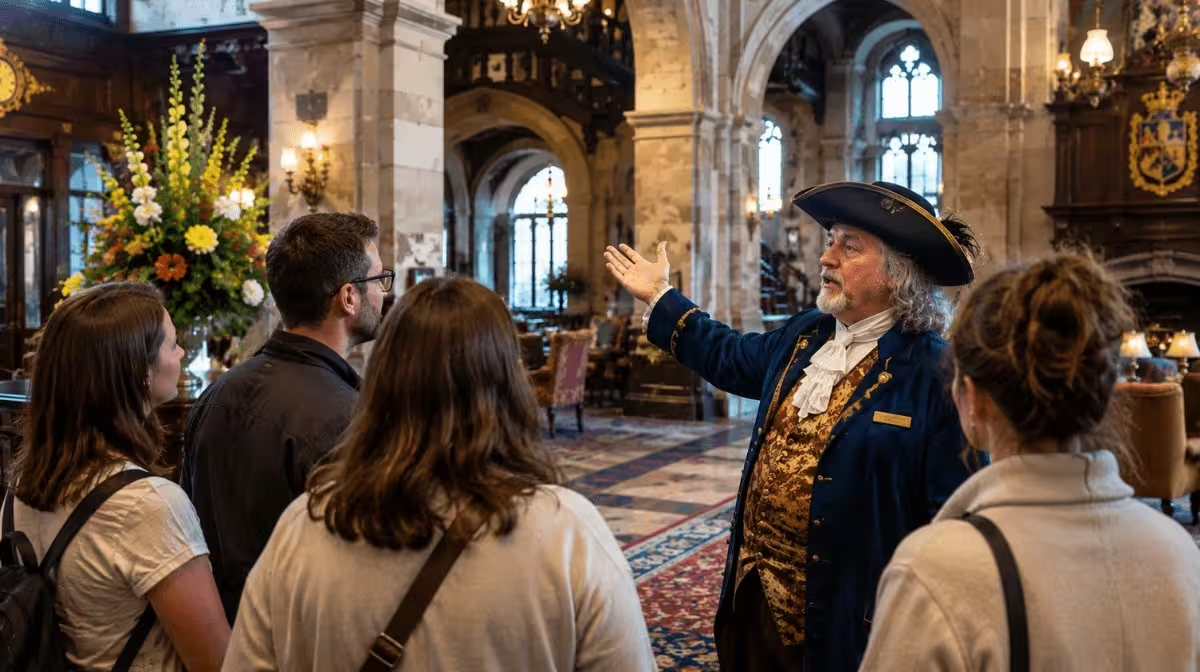
The guided tour of the Château Frontenac runs approximately one hour and is led by a character guide in period costume — which sounds theatrical until you are twenty minutes in and the history of the building has become a coherent story rather than a series of disconnected facts. The tour covers the hotel’s origins, the architecture, the key figures in its history, the wartime conferences, and the evolution of the building across 130 years. You get access to areas not open to the general public, including interior rooms and spaces associated with the 1943 and 1944 Allied meetings.
The group size is kept small, which means the guide can take questions and adjust the pace to the group’s interests. If the wartime history is what you came for, linger on that section. If the architecture is more your interest, the guide knows the building well enough to go deeper. It is one of the more genuinely interesting one-hour tours available anywhere in the city.
Visiting Without Staying
The Château Frontenac is not a closed building. Non-guests are welcome in the lobby, the bars, the restaurants, and the public corridors during opening hours, and a visit to the interior is worth doing regardless of whether you have booked a room or a tour. The lobby alone — high-ceilinged, lined with period photographs, busy with the particular energy of a great hotel in the middle of the day — tells you something about the building that the exterior cannot.
Where to Go as a Non-Guest
The 1608 Wine and Cheese Bar in the lobby level is named for the year Champlain founded Quebec City and is one of the better places in the historic centre to sit down with a glass of local wine and a plate of Quebec cheese without feeling rushed. The Sam Bistro on the ground floor serves all-day food and is a reasonable lunch option if you are spending time in the hotel. The Champlain Restaurant on the upper floors offers a more formal dining experience with the St. Lawrence view that the hotel’s position earns — worth booking ahead for dinner.
The public corridor — the Rue du Château — is freely walkable and lined with historical photographs that amount to an informal museum of the building and the city. Spend fifteen minutes reading the captions and you will understand the hotel’s place in Quebec City’s history considerably better than you did when you walked in.
Should You Stay Here?
Staying at the Château Frontenac is a different experience from visiting it. The rooms vary considerably — the standard rooms in the older wings are comfortable but not expansive, while the suites and the rooms in the central tower are genuinely grand. The position is unmatched: waking up above the St. Lawrence, with Terrasse Dufferin directly outside and the entire historic centre of Quebec City walkable from the front door, is difficult to replicate anywhere else in the city.
The hotel is expensive, as you would expect. Whether it is worth the premium depends entirely on what you want from the stay. For a special occasion, or for anyone for whom the building itself is part of the reason for the trip, the answer is straightforwardly yes. For a standard two-day visit where the hotel is a base rather than a destination, the money is better spent on a well-located property just outside the walls and put toward experiences in the city instead.
The map below pulls live availability and pricing across Quebec City for your dates — from properties inside the walls to the neighbourhoods just beyond them.
Some links here are affiliate links. If you book through them we may earn a small commission, at no extra cost to you.
Outside the HotelTerrasse Dufferin
The wooden boardwalk of Terrasse Dufferin runs for 671 metres along the cliff edge directly in front of the Château Frontenac, looking out over the St. Lawrence and the mountains of the south shore. It is one of the great urban promenades in North America — free, open year-round, and at its best in the two hours either side of dusk when the light on the river changes and the city below begins to illuminate.
In summer, kiosk bars along the terrace sell drinks and the boards are busy with people from every part of the world doing the same thing: standing above the river and looking at something genuinely beautiful. In winter the terrace takes on a different character — quieter, snow-covered, the river frozen at its edges — and a toboggan run operates from the top of the cliff down the stairs, a tradition that goes back to the 18th century. The terrace connects at its far end to the Governors’ Promenade, which continues along the fortification walls toward the Citadelle and the Plains of Abraham.
How to Get to the Château Frontenac
The Château Frontenac sits at the heart of Upper Town in Old Quebec, on Rue des Carrières directly behind Terrasse Dufferin. It is walkable from anywhere in the historic centre — from the main gate on Rue Saint-Louis it is a five-minute walk, from Place d’Armes directly in front it is immediate. If you are arriving from Lower Town, the funicular from Rue du Petit-Champlain deposits you at the foot of Terrasse Dufferin, thirty seconds from the hotel’s entrance. The Breakneck Stairs beside the funicular are the alternative on foot.
If you are driving, park at one of the garages in the old city rather than attempting to navigate the narrow streets of Upper Town. The Hôtel de Ville parking on Rue des Jardins is the most convenient for the Château. From anywhere else in the city, the hotel is the building you can see from almost everywhere — follow the copper turrets.
Can you visit the Château Frontenac without staying there?
Yes. The lobby, bars, restaurants, and public corridors are open to non-guests during normal hours. The guided interior tour gives you access to areas not otherwise open to the public, including rooms associated with the 1943 and 1944 wartime conferences. You do not need to be a hotel guest to visit, tour, or eat here.
How long does the Château Frontenac guided tour take?
Approximately one hour. The tour covers the hotel’s origins, the architecture, the key historical figures, and the wartime conferences of 1943 and 1944. Groups are kept small and the guide takes questions throughout.
What happened at the Château Frontenac during World War Two?
The Château hosted two Allied conferences during the Second World War — the First Quebec Conference in August 1943 and the Second Quebec Conference in September 1944. Churchill and Roosevelt were both present. Key decisions included planning for the invasion of Europe and agreements on atomic research sharing between Britain and the United States.
Why is the Château Frontenac famous?
It is the most photographed hotel in the world, the defining image of Quebec City’s skyline, and the site of significant historical events including the 1943 and 1944 Allied wartime conferences. It was built in 1893 by the Canadian Pacific Railway and has been continuously operating since. Its position above the St. Lawrence on the cliff of Cap Diamant makes it visible from much of the city and from the river.
Who designed the Château Frontenac?
The original building was designed by American architect Bruce Price and opened in 1893. The iconic central tower, which completes the building’s familiar silhouette, was designed by William Sutherland Maxwell and added in 1924.
Is it worth staying at the Château Frontenac?
For a special occasion or for anyone for whom the building is itself a destination, yes — the position is unmatched and the experience of the hotel is genuinely distinct. For a standard two-day visit to Quebec City, a well-located property just outside the walls delivers similar convenience at considerably lower cost.
What is Terrasse Dufferin?
Terrasse Dufferin is the 671-metre wooden boardwalk that runs along the cliff edge directly in front of the Château Frontenac, overlooking the St. Lawrence. It is free, open year-round, and one of the best vantage points in the city. In winter a historic toboggan run operates from the terrace.
How do I get to the Château Frontenac?
The hotel is in the heart of Upper Town in Old Quebec and is walkable from anywhere in the historic centre. From Lower Town, take the funicular from Rue du Petit-Champlain — it deposits you at Terrasse Dufferin, thirty seconds from the entrance. By car, park in one of the Old Quebec garages rather than driving to the hotel directly.
thanks for the information