 Skip to content
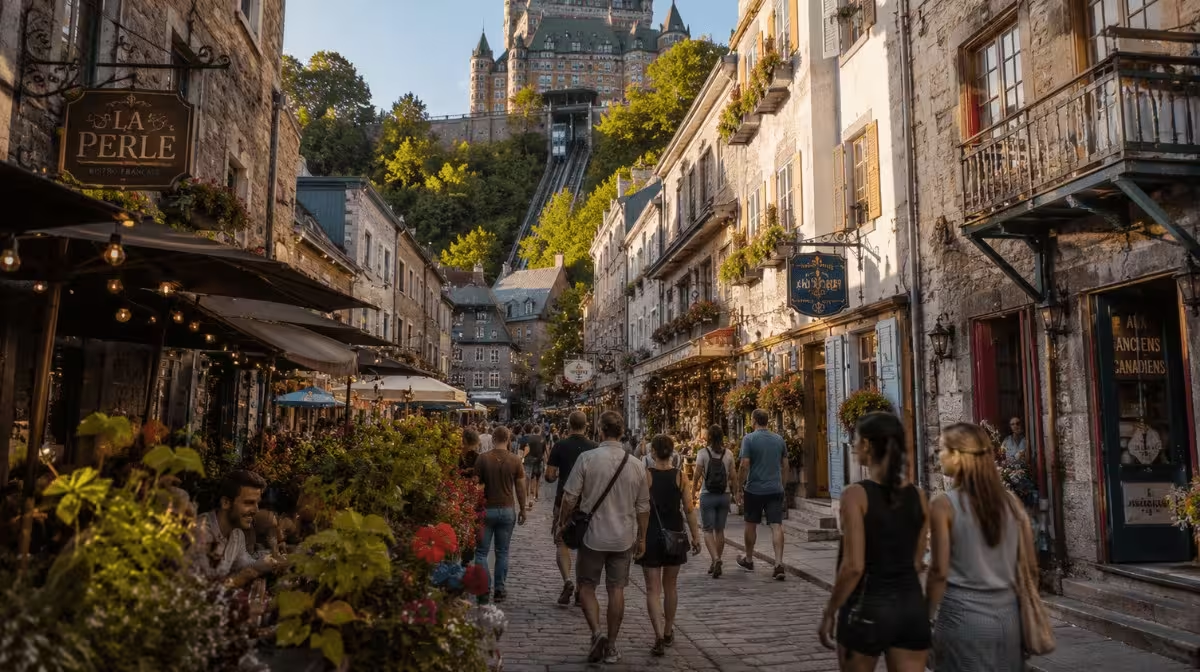
Quebec City food tours are one of the best ways to understand a city that takes its food culture more seriously than almost anywhere else in North America. The Québecois kitchen sits at an unusual intersection — French technique applied to Canadian ingredients, working-class comfort food elevated by regional pride, a maple-and-pork tradition that predates the province by centuries. A good food tour threads you through that history in three hours, stopping at producers, bakeries, and restaurants that you would not find independently, with a guide who knows what makes each stop significant. These are the Quebec City food tours worth booking.
Affiliate disclosure: This post contains affiliate links. We may earn a small commission if you book through our links, at no extra cost to you.
Contents
Quebec City Food Tours — Quick Comparison
| Tour | Duration | Type | Best For | Price From | Book |
|---|---|---|---|---|---|
| Old Quebec Food Tour | 3 hours | Small group walking | First-timers, culture | ~$85 USD | Viator |
| Old Port Market Tour | 2.5 hours | Market + tastings | Foodies, local produce | ~$75 USD | Viator |
| Evening Tasting Tour | 3 hours | Evening walking | Couples, wine lovers | ~$95 USD | Viator |
Old Quebec Food Tour: Old World to Modern
This is the food tour to book on your first visit to Quebec City, and it is the one most consistently recommended by visitors who have done it. The tour threads through Old Quebec — both Upper and Lower Town — stopping at local producers, traditional bakeries, and Québecois restaurants with a guide who covers both the food and the neighbourhood history at each stop. Tastings include fresh pastries, traditional Québecois dishes, regional cheese, and at least one maple product that is not the obvious one. The group is kept small enough that the guide can take the conversation in whatever direction the group’s interests run — food history, production methods, the cultural significance of specific dishes.
The format works particularly well for visitors who want to understand the food culture rather than simply sample it. By the time the tour ends in Lower Town, you will have a working knowledge of what makes Québecois cuisine distinct, which restaurants in the city are worth returning to independently, and what to order when you get there.
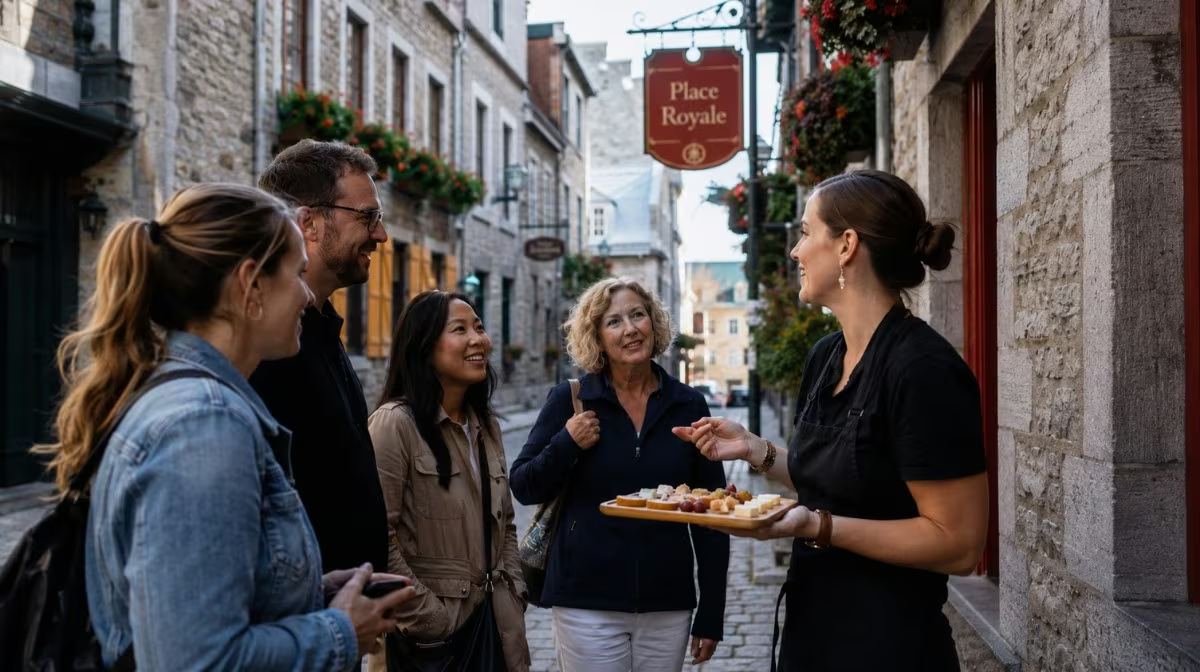
The Old Quebec Food Tour threads through Upper and Lower Town — three hours, multiple tastings, small group.
Old Port Market Food Tour
The Marché du Vieux-Port in Lower Town is one of the best food markets in Quebec City — local cheese, artisan charcuterie, fresh bread, maple products, and seasonal produce from the surrounding region. This tour takes you through it with a guide who knows the vendors and can make introductions, explain what is worth buying versus what is tourist-facing, and put the local produce in the context of the regional food culture. Tastings are included throughout.
The market tour is shorter and more focused than the Old Quebec Food Tour — better suited to visitors who already have a sense of the city and want to go deeper on the food specifically, or who are travelling with someone who would rather spend the afternoon at a market than walking through cobblestone streets. It runs in the morning when the market is at its fullest and the vendors are most engaged.
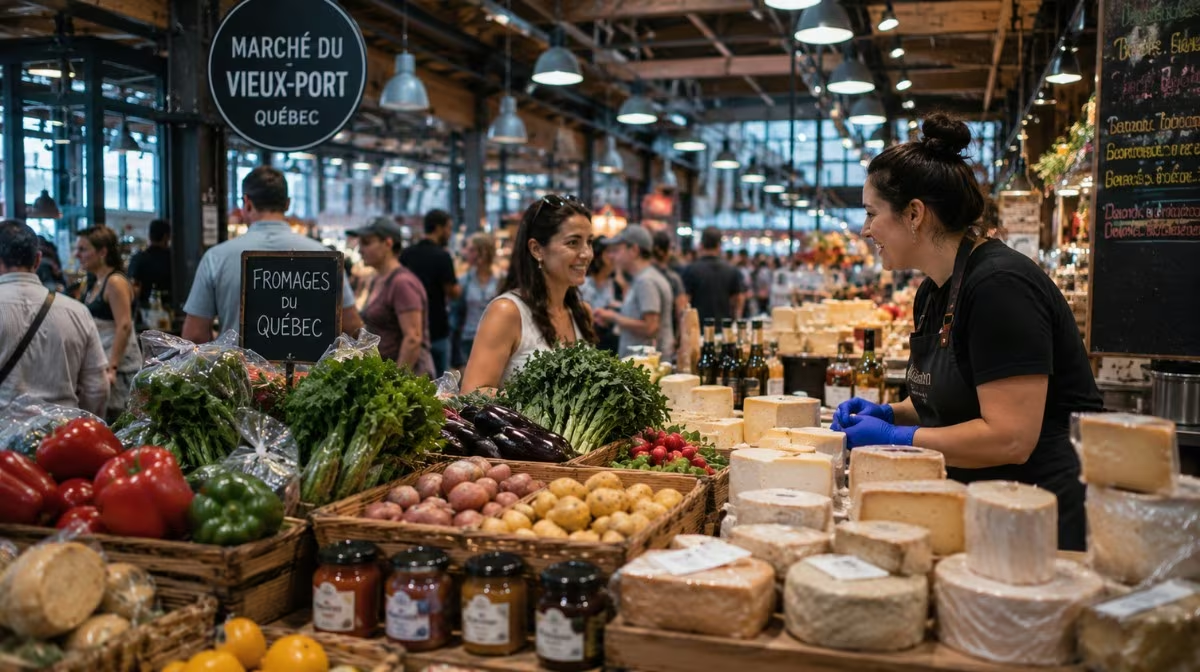
The Marché du Vieux-Port — local cheese, artisan charcuterie, maple products, and seasonal produce from the surrounding region.
Best for EveningsEvening Food and Wine Tasting Tour
The evening tour covers similar ground to the Old Quebec Food Tour — walking through the historic neighbourhoods with stops at restaurants and producers — but with wine and cider pairings at each stop and a pace calibrated to the end of the day rather than the beginning. The tour runs as the city’s restaurants open for the evening service, which means you move through Old Quebec at the hour when it is at its most atmospheric — the light changing, the terraces filling, the stone buildings lit from below.
Better suited to couples than the daytime tours — the pace is more relaxed, the pairings make it feel like a progressive dinner rather than a tasting circuit, and the evening setting gives the whole thing a different energy. Worth considering as an alternative to booking a single restaurant for dinner if you want to cover more ground in the same time.
Quebec City Food Culture
Quebec City’s food identity is rooted in the French colonial period but has evolved into something that is distinctly its own — not French, not generically Canadian, but Québecois in a way that is instantly recognisable once you have eaten it. The combination of French culinary technique, Canadian winter ingredients, and centuries of isolation from both France and English Canada produced a kitchen that is simultaneously sophisticated and deeply practical.
The province’s relationship with maple is the obvious starting point — Quebec produces more than 70 percent of the world’s maple syrup, and the local use of it goes considerably beyond the bottle at the breakfast table. Maple vinegar, maple butter, maple-cured meats, and the tire sur la neige (hot maple syrup poured on snow and eaten with a wooden stick) are all part of a tradition that runs several centuries deep. A good food tour will take you past the tourist-facing maple products and into the ones that locals actually buy.
Cheese is the other pillar. Quebec has a thriving artisan cheese culture — partly rooted in the province’s monastic tradition, partly driven by a dairy industry that has been regulated and supported since the 18th century. Monastery cheeses like Oka (originally made by Trappist monks) and the harder, aged regional varieties are a different category entirely from anything produced elsewhere in Canada. The Old Port Market is the best place to encounter them in concentrated form.
What to EatThe Essential Québecois Dishes
French fries, cheese curds, and hot gravy. The dish that defines Québecois comfort food — simple in concept, specific in execution. The cheese curds must squeak.
A spiced meat pie — traditionally pork and veal, sometimes game — eaten at Christmas and New Year. One of the oldest dishes in the Québecois repertoire.
Pork meatballs and pigs’ feet in a rich, dark gravy. A traditional winter dish that belongs in the same conversation as the great braises of French cooking.
A smooth pork spread — similar to French rillettes but spiced differently — eaten on toast at breakfast. One of the most distinctively Québecois things you can eat.
A layered meat pie with pastry between each layer — game, pork, or a mix. A regional dish from the Lower St. Lawrence that appears on menus in Quebec City in winter.
Hot maple syrup poured onto packed snow and rolled onto a wooden stick. A sugar shack tradition that runs from February through April — one of the best things in Quebec.
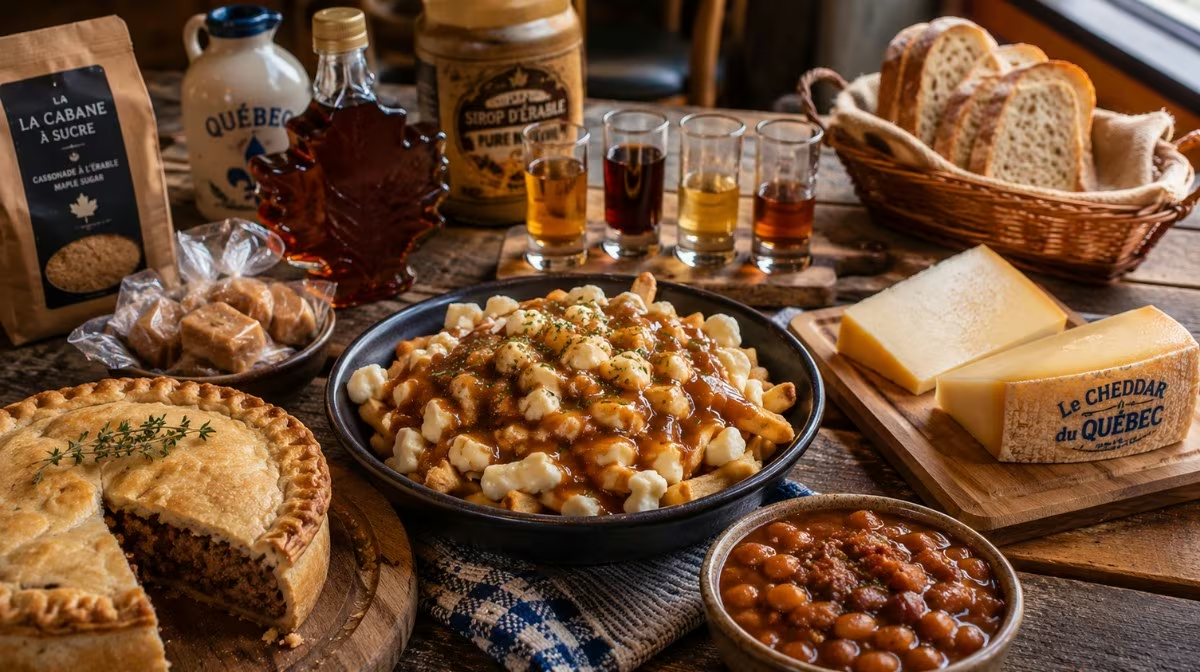
The essential Québecois spread — poutine, tourtière, regional cheese, and maple in more forms than you’d expect.
Before You BookTips for Booking a Quebec City Food Tour
Where to Stay in Quebec City
All three food tours depart from or pass through Old Quebec — staying inside the walls or in the neighbourhoods immediately outside puts you within walking distance of every meeting point. The map below shows live availability across the city for your dates.
Some links here are affiliate links. We may earn a small commission if you book through them, at no extra cost to you.
Are food tours worth it in Quebec City?
Yes — Quebec City has a genuinely distinct food culture rooted in the French colonial period and the province’s agricultural tradition, and a good guide makes that culture legible in a way that independent exploration rarely does. The Old Quebec Food Tour in particular is consistently rated as one of the best ways to spend three hours in the city.
What food is Quebec City known for?
Poutine, tourtière, ragoût de boulettes, cretons, and an unusually sophisticated artisan cheese culture. Maple products go far beyond syrup — maple butter, maple vinegar, and tire sur la neige (hot maple syrup on snow) are all part of the local food tradition. The Old Port Market is the best single place to encounter the full range of regional produce.
How long do Quebec City food tours last?
Most run two and a half to three hours. The Old Quebec Food Tour is three hours; the Old Port Market tour is two and a half. Evening tours also run approximately three hours. All include enough food to constitute a light meal — come with an appetite rather than on a full stomach.
Are Quebec City food tours suitable for vegetarians?
Most tours can accommodate vegetarians with advance notice. Québecois food is heavily pork-based, so the guide will substitute where possible — flag your dietary requirements when booking rather than at the meeting point to give the guide time to arrange alternatives.
What is the best food tour in Quebec City?
The Old Quebec Food Tour is the most consistently recommended — three hours, small group, covers both Upper and Lower Town with multiple tastings including pastries, traditional dishes, regional cheese, and maple products. Best for first-time visitors who want to understand the food culture rather than simply sample it.
When should I book a Quebec City food tour?
At least 48 hours ahead in summer, ideally a week out. The best guides run small groups and fill up quickly between June and August. Food tours run year-round — winter is a quieter and often better-value time to visit, and some of the most distinctively Québecois food experiences (sugar shack season, tire sur la neige) are only available in late winter and early spring.
Where do Quebec City food tours start?
Most tours meet in Old Quebec — either at the Tourism Office in Upper Town or at a designated point in Lower Town near Place Royale. Exact meeting points are confirmed at booking. All depart from within or immediately adjacent to the historic centre, making them easy to reach on foot from anywhere inside the walls.
Can I do a food tour and a history tour on the same visit?
Yes — and it is worth doing. The Old Quebec History Walk and the Old Quebec Food Tour cover overlapping ground from completely different angles. The recommended approach is the history walk on Day 1 afternoon to understand the geography and context, and the food tour on Day 2 morning once you have your bearings in the neighbourhood.