 Skip to content
Old Quebec City — Vieux-Québec — is the most historically intact urban environment in North America. The walls are real, the cobblestones are original, and the neighbourhoods on either side of the cliff that divides the city have distinct characters that reward slow exploration on foot. This guide walks you through each one: what it feels like to be there, what is worth seeing, where to eat, and how the parts connect into a whole. Read it before you go and carry it with you when you do.
Affiliate disclosure: This post contains affiliate links. We may earn a small commission if you book through our links, at no extra cost to you.
Contents
Understanding the City Before You Walk It
Quebec City is built on a cliff. That is the single most important fact for navigating it, because almost everything about the city’s geography — the two distinct neighbourhoods, the funicular, the dramatic views, the reason the Château Frontenac sits where it does — follows from that one geographical fact. Cap Diamant, the promontory above the St. Lawrence, divides the city into Upper Town (Haute-Ville) on the plateau above and Lower Town (Basse-Ville) on the narrow strip of land between the cliff and the river.
Upper Town is where the governors lived, the cathedrals were built, and the military fortifications were raised. Lower Town is where the merchants traded, the ships docked, and the city’s commercial life took root. The two have coexisted in a state of elegant tension for four centuries, connected by the cliff staircase (the Breakneck Stairs) and the funicular — both of which are worth using at least once in each direction.
Old Quebec as a whole is a UNESCO World Heritage Site — one of only two in Canada designated for its urban heritage. Walking it properly takes the better part of two days, which is why the Quebec City 2-day itinerary structures the visit the way it does. This guide gives you the detail behind each neighbourhood so you know what you’re walking into before you arrive.
Neighbourhood OneUpper Town — Haute-Ville
The seat of power, the church, and the military. Upper Town is where the governors governed, the bishops built their cathedrals, and the British raised the fortifications that made Quebec City the most heavily defended city in North America. It is formal in its bones — the streets are wider than Lower Town, the architecture more institutional — but it wears its history lightly.
Place d’Armes
The central square of Upper Town sits directly in front of the Château Frontenac and has been the heart of the city since the French colonial period. It was originally a military parade ground — d’Armes means “of arms” — and later became the civic gathering point it remains today. The Château dominates the square from the east and Terrasse Dufferin runs along the cliff edge beyond it. The Governors’ Garden, a formal French-style parterre, occupies the space between the square and the terrace. Sit here for ten minutes before doing anything else and the geography of the city begins to arrange itself.
Notre-Dame de Québec Basilica-Cathedral
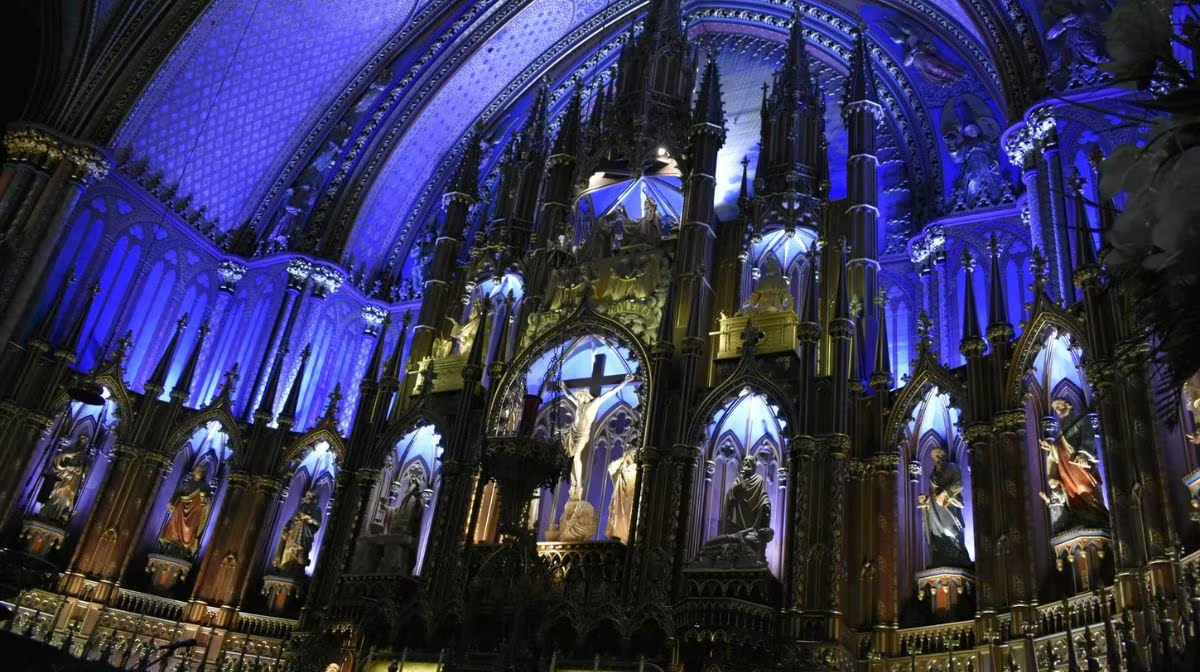
The oldest parish north of Mexico, founded in 1647 and rebuilt several times after fires and bombardment. The current interior dates largely from the 19th century and is opulent in the French Catholic tradition — gilded canopies, a baldachin over the altar, vaulted ceilings painted pale gold. Samuel de Champlain is believed to be buried beneath the floor, though his exact resting place has never been conclusively identified. Entry is free. It takes twenty minutes to walk properly and is one of the most beautiful interiors in the city.
Rue Saint-Louis
The main artery of Upper Town runs from the Saint-Louis Gate in the fortification walls to Place d’Armes, lined with restaurants, hotels, and the kind of stone townhouses that make Quebec City look like no other city in North America. The architecture along Saint-Louis dates from the 17th to 19th centuries and is remarkably consistent in scale and material — limestone, steep roofs, iron hardware. The Maison Jacquet at number 34 is the oldest surviving house in Quebec City, built in 1675 and now a restaurant. Walk the full length of the street at least once.
The Château Frontenac
The defining building of the city deserves more than a passing glance from the square. The lobby, the public corridor, and the bars are open to non-guests, and the guided interior tour — which covers the hotel’s history and the 1943 and 1944 Allied wartime conferences held here — is one of the best hour-long experiences available in the city. Book it ahead in summer.
Rue Saint-Jean is the best street for eating in Upper Town — dense with independent restaurants, wine bars, and café terraces that stay open late. It runs from the Saint-Jean Gate through to the edge of the Quartier Saint-Jean-Baptiste outside the walls and is the most animated street in the historic centre after dark.
Aux Anciens Canadiens on Rue Saint-Louis occupies one of the oldest houses in the city and serves traditional Québecois food — tourtière, ragoût de boulettes, maple-glazed pork — in a room that looks much as it did two centuries ago. It is a tourist restaurant in the best sense: the food is genuinely good and the setting is irreplaceable.
1608 Wine and Cheese Bar inside the Château Frontenac is the best option for a longer, slower stop — Quebec cheese, local charcuterie, and a wine list that leans toward French and Québecois producers. Worth the hotel prices for the room.
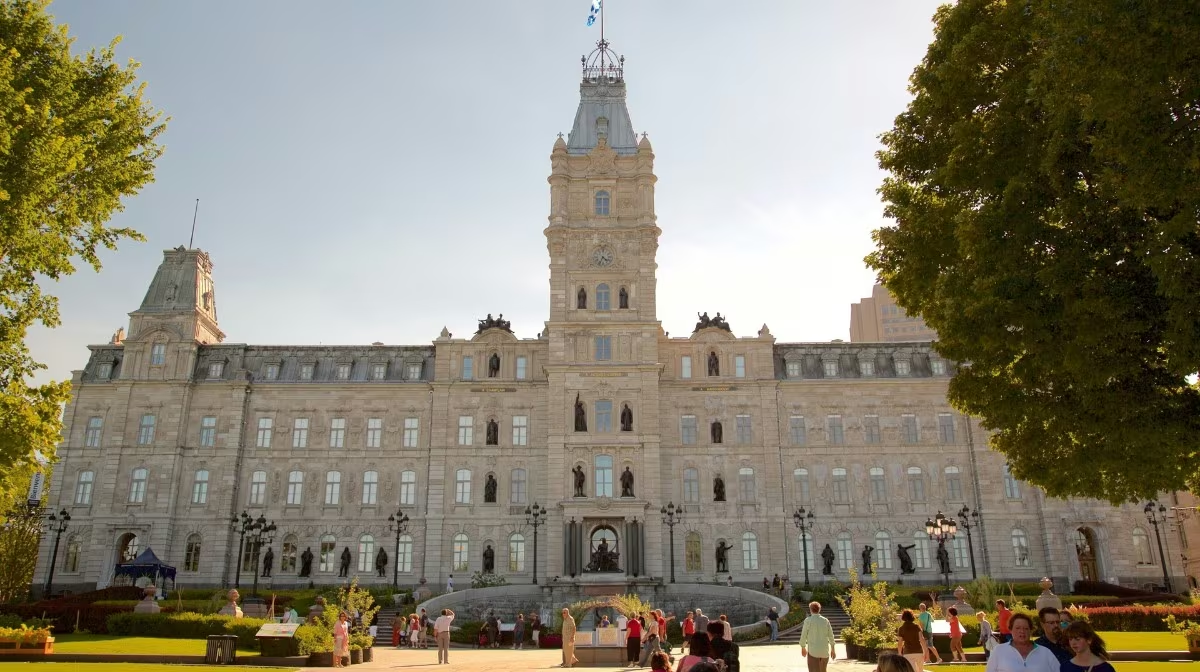
Upper Town — where the governors lived, the cathedrals were built, and the fortifications were raised above the cliff.
Neighbourhood TwoQuartier Petit-Champlain
The oldest commercial district in North America, and the most immediately photogenic part of the city. Petit-Champlain occupies the narrow strip of land at the base of the cliff below Upper Town, its stone buildings pressed so close to the escarpment that some of them back directly into the rock face. In summer the window boxes overflow with flowers, the terraces fill by mid-morning, and the light on the facades in the early hours is extraordinary.
Rue du Petit-Champlain
The pedestrianised main street of the quarter is one of the most frequently photographed streets in Canada — and earns it. The scale is intimate, the buildings are original, and the whole street is closed to vehicles, which gives it a pace that the rest of the city can’t quite match. Artisan boutiques, jewellers, craft shops, and café terraces line both sides. It can feel crowded in peak summer afternoons; the best time to walk it is early morning when the light is right and the tour groups haven’t arrived.
The Funicular
The cliff railway that connects Petit-Champlain to Terrasse Dufferin above has been running since 1879, making it one of the oldest funiculars in North America. The ride takes less than two minutes and costs a few dollars. It is not a novelty — it is the most efficient way to move between Upper and Lower Town — but it is also a genuinely pleasant way to arrive in Petit-Champlain from above, descending into the neighbourhood as the stone facades close in around you. The Breakneck Stairs beside it are the free alternative and are worth doing once.
Maison Louis-Jolliet
The funicular’s Lower Town station is housed in the Maison Louis-Jolliet, built in 1683 and one of the oldest surviving structures in the quarter. Louis Jolliet — the explorer who, with Jacques Marquette, was the first European to navigate the upper Mississippi River — lived here. The building is now largely given over to the funicular infrastructure and a small gift shop, but the facade and the position at the foot of the stairs are worth a moment of attention.
Café-Boulangerie Paillard on nearby Rue Saint-Jean (a short walk from Petit-Champlain) is the best breakfast option in the area — proper coffee, excellent pastries, sandwiches, and a long communal table that fills quickly on weekday mornings.
Le Cochon Dingue on Boulevard Champlain, a short walk along the waterfront from Petit-Champlain, is a reliable all-day restaurant with a broad menu and good terrace. Better for lunch than dinner in terms of value.
The restaurants on Rue du Petit-Champlain itself are reliably decent but variable in quality — walk the street first and choose by the terrace and the menu board rather than committing in advance.
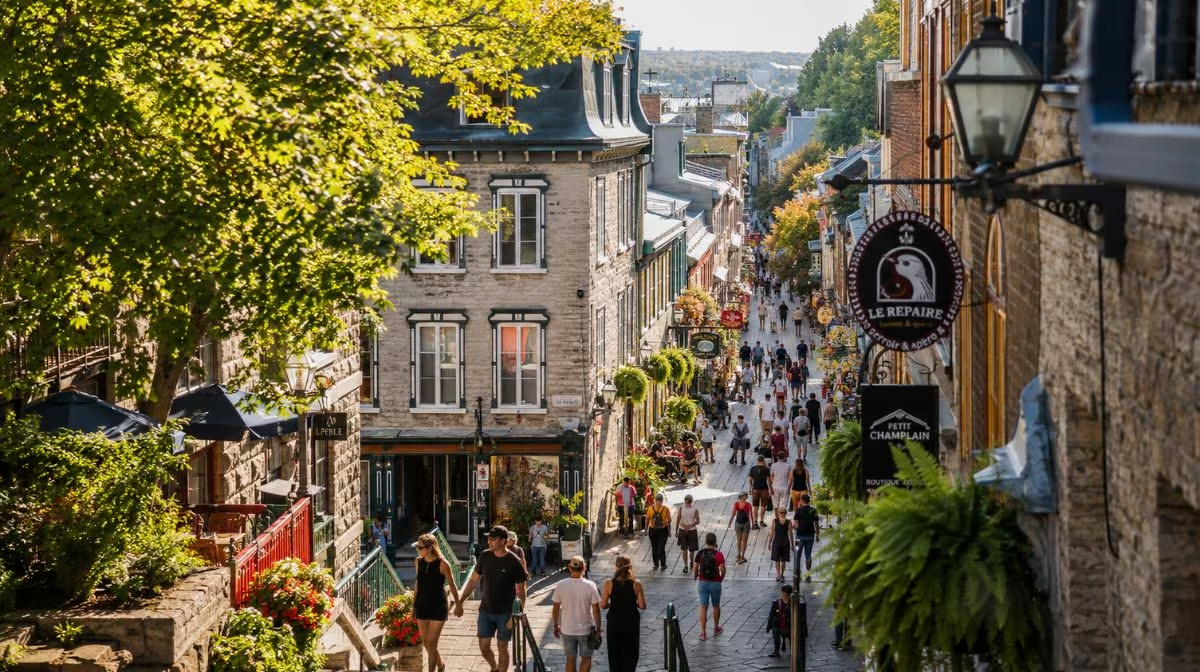
Rue du Petit-Champlain — the oldest commercial street in North America, best walked early before the crowds arrive.
Neighbourhood ThreeLower Town — Basse-Ville
The commercial and mercantile heart of historic Quebec City, Lower Town stretches from the base of the cliff to the Old Port along the St. Lawrence. It is less immediately dramatic than Petit-Champlain but more historically resonant — this is where the city’s economic life took root, where ships unloaded and merchants traded, and where the French considered the birthplace of their civilisation in North America.
Place Royale
The stone square at the heart of Lower Town is the most historically significant public space in Quebec City and arguably in Canada. Samuel de Champlain built his habitation here in 1608 — the first permanent French settlement in North America. The square itself dates from the late 17th century and is lined with limestone merchant houses that have been meticulously restored to their colonial-era appearance. Notre-Dame-des-Victoires church sits at one end, its simple facade and complex interior a study in the gap between Québecois restraint on the outside and Catholic extravagance within. Entry is free.
The square can feel staged in the middle of the day when tour groups are circulating — it is better experienced in the early morning or the early evening, when the light comes off the surrounding buildings at an angle that makes the stone glow and the tourists have moved on to dinner.
Rue Saint-Paul
Running parallel to the river through the heart of Lower Town, Rue Saint-Paul is the most local-feeling street in Old Quebec — antique dealers, independent galleries, and restaurants that fill with people who actually live here rather than visitors passing through. It is quieter than the main tourist circuit and considerably more interesting for it. Worth an hour of slow walking in either direction.
The Old Port
At the eastern end of Lower Town, the Old Port promenade runs along the St. Lawrence with views across the river to the south shore and the mountains beyond. The Marché du Vieux-Port (the Old Port Market) sits at the landward edge of the promenade and is one of the best food markets in Quebec — local cheese, maple products, cured meats, fresh bread, and seasonal produce from the surrounding region. Open daily in summer, weekends in the shoulder seasons. Worth visiting before breakfast if you are self-catering, or simply for the quality of what is grown and made in this part of the province.
Rue Saint-Paul has the highest concentration of good independent restaurants in Lower Town — walk the street and choose by what looks right. The neighbourhood’s restaurants skew toward bistro cooking rather than traditional Québecois, and the wine lists are generally better than anywhere in Upper Town at the same price point.
For the full Québecois food experience in Lower Town, the Old Quebec Food Tour covers the neighbourhood’s best producers and restaurants in three hours with a guide — the most efficient way to eat well here if you only have two days. Book it on Viator.
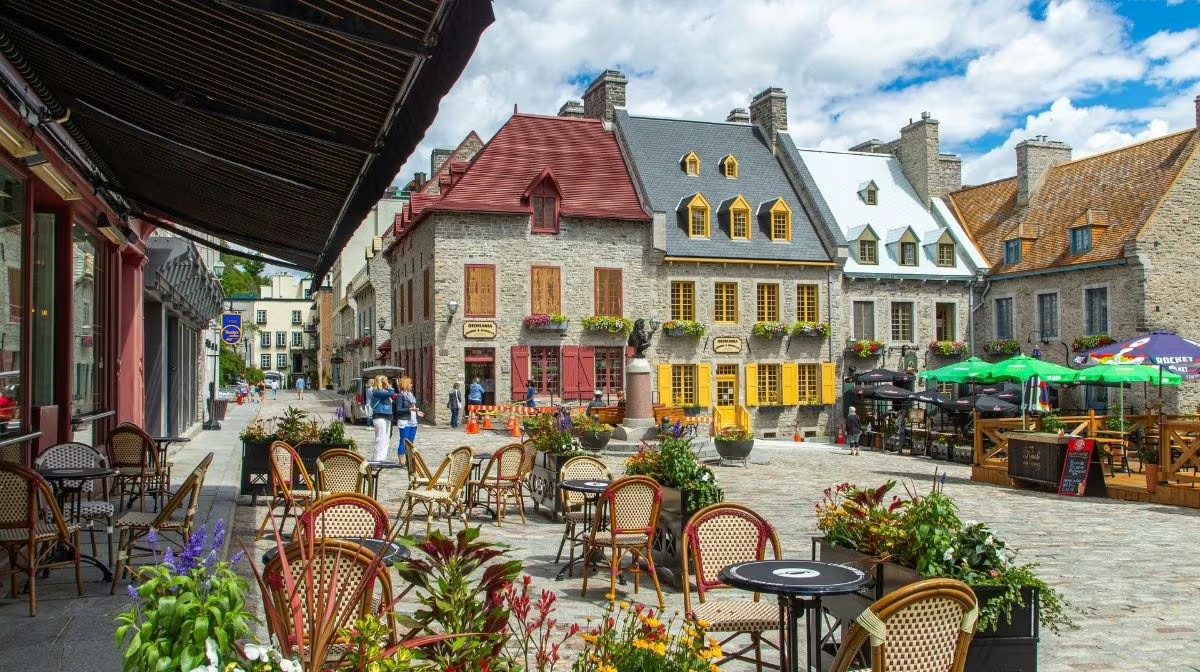
Lower Town and Place Royale — where Champlain founded the first permanent French settlement in North America in 1608.
The WallsThe Fortification Walls
The only remaining fortified city walls in North America north of Mexico, and one of the most satisfying walks in the city. The walls encircle Upper Town for approximately 4.6 kilometres, incorporating four gates, several bastions, and the Citadelle at the southern end. They were built by the French in the 17th century and substantially modified and extended by the British after 1759. Walking them at height gives you the best overview of the city’s geography available on foot.
Walking the Walls
The walls are freely accessible and can be walked at height along the top for much of their length. The most rewarding section runs from Terrasse Dufferin east along Rue des Remparts — the viewpoint looking down over Lower Town and the St. Lawrence from the wall walk is one of the city’s great perspectives, and one that most visitors miss by staying on the terrace level. The full circuit takes two to three hours at a relaxed pace. The section along the west wall near the Saint-Jean Gate is less dramatic but historically important — the massive earthwork bastions here represent some of the most sophisticated military engineering of the 18th century.
The Four Gates
Four historic gates pierce the walls: Saint-Louis, Saint-Jean, Kent, and the Prescott Gate (which leads down to the Breakneck Stairs). All four were rebuilt or restored in the 19th century in a romantic medieval style that is more theatrical than historically accurate — the originals were simpler military structures — but they are striking landmarks that anchor the entry points to the old city. The Saint-Louis and Saint-Jean gates are the most used and the most photographed.
The Citadelle
The star-shaped fortress at the southern tip of the walls is the largest British fortification in North America and is still an active military base — home to the Royal 22nd Regiment (the “Van Doos”), the only French-speaking regular infantry regiment in the Canadian Army. Guided tours of the interior run throughout the day in summer and cover the military history, the changing of the guard ceremony, and the Governor General’s summer residence within the walls. The exterior is worth walking around regardless — the view of the St. Lawrence from the southern bastions, with the Plains of Abraham stretching behind you, is the most complete panorama in the city.
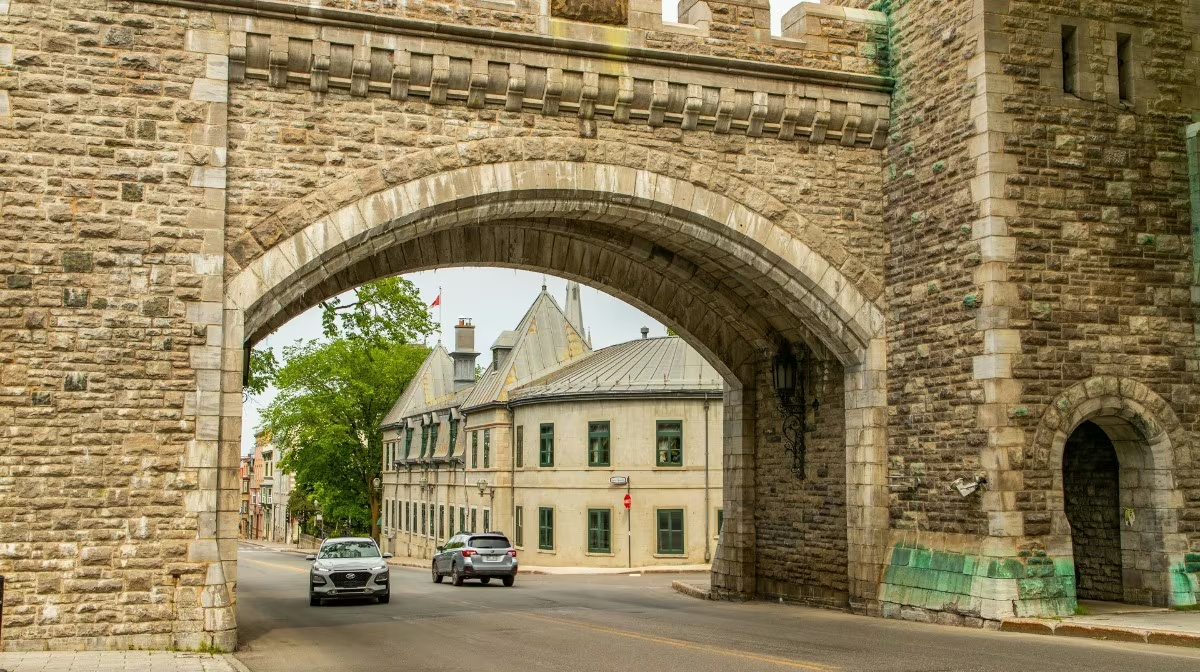
The fortification walls — 4.6 kilometres of the only remaining walled city in North America north of Mexico.
Beyond the Walls — SouthThe Plains of Abraham
The battlefield that changed the continent, now one of the largest urban parks in Canada. The Plains of Abraham stretch west from the Citadelle along the cliff above the St. Lawrence, covering 103 hectares of open parkland where the French and British fought for less than an hour in September 1759 — long enough to determine that Canada would become an English-speaking country rather than a French one.
The Abraham Martin Discovery Pavilion at the park’s eastern entrance (accessible from the Citadelle) tells the story of the battle and the political consequences that followed. It is an unusually good interpretation centre — honest about the complexity of what happened here, including the perspectives of the Indigenous peoples whose territory this all was long before the French and British arrived. The park itself rewards a slow walk regardless of whether you engage with the history: the St. Lawrence views from the cliff edge are exceptional, and on a summer afternoon the lawns fill with people who live here and treat it as exactly what it is — a great urban park that happens to sit on historically significant ground.
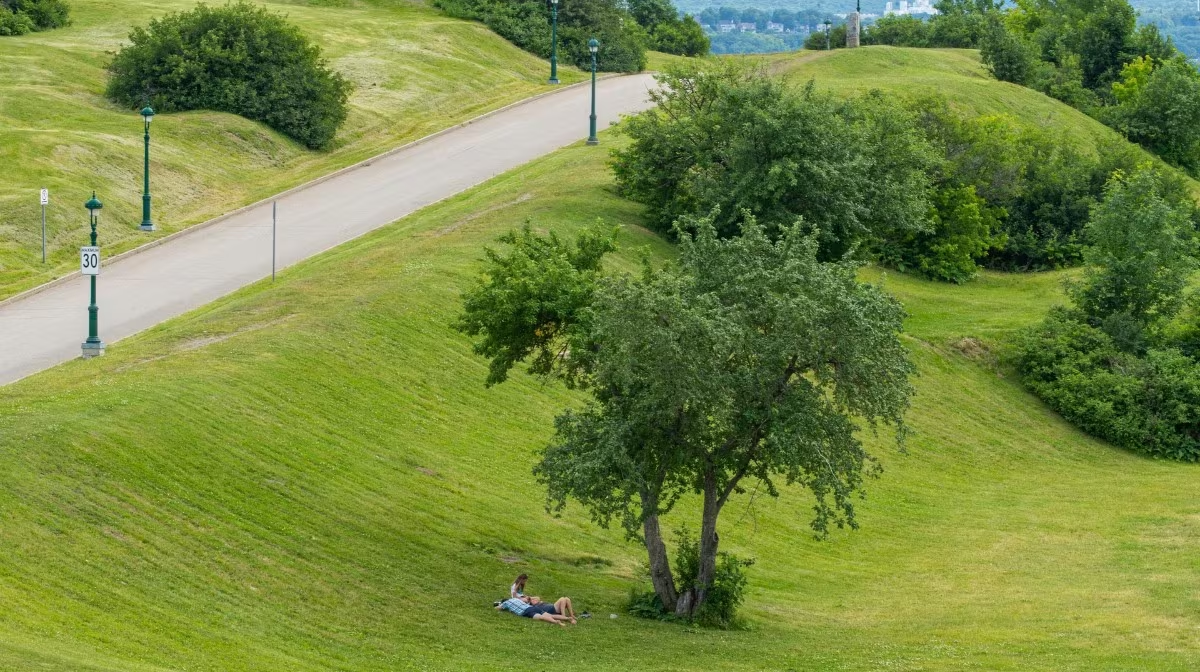
The Plains of Abraham — the battlefield that changed the continent, now one of the largest urban parks in Canada.
Beyond the Walls — NorthOutside the Walls — Saint-Jean-Baptiste and Saint-Roch
The two neighbourhoods immediately outside the fortification walls to the north are not on most visitor itineraries, which is precisely what makes them worth an hour. They feel like actual Quebec City rather than the preserved and curated version within the walls — independent bookshops, wine bars, a local food market, restaurants where the clientele is almost entirely Québecois.
Saint-Jean-Baptiste
Immediately outside the Saint-Jean Gate, this neighbourhood extends the energy of Rue Saint-Jean beyond the walls into a more residential, less tourist-facing version of the same street. The architecture is Victorian rather than colonial — brick and wrought iron rather than limestone — and the neighbourhood has a slight bohemian quality that distinguishes it from the formal character of Upper Town. Good independent café culture here, better than anything inside the walls for a working morning with a laptop.
Saint-Roch
Ten minutes on foot north of the walls, Saint-Roch is Quebec City’s most interesting neighbourhood for food and drink — a former industrial and working-class district that has regenerated into a creative quarter with excellent restaurants, craft breweries, and a covered market. The Marché Saint-Roch on Rue Saint-Joseph is worth visiting for local produce and prepared food. Avenue Cartier, which connects the two neighbourhoods, is the single best street in the city for an evening out away from the tourist circuit.
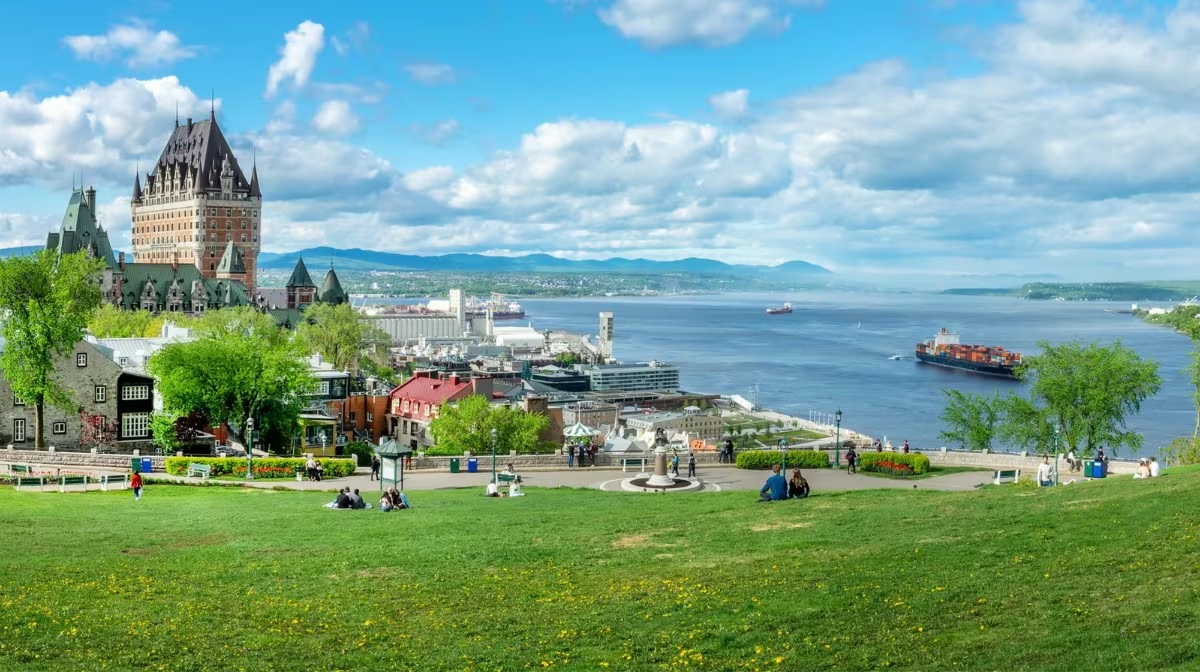
Saint-Jean-Baptiste — immediately outside the Saint-Jean Gate, where the city feels more lived-in and less curated.
Getting Around Old Quebec
Old Quebec is compact enough to walk entirely — from the Saint-Louis Gate at the west end of the walls to the Old Port at the east is approximately 25 minutes on foot at a normal pace. The gradient is the only complication: the cliff between Upper and Lower Town is steep, and the route between the two neighbourhoods involves either the Breakneck Stairs (manageable but tiring), the funicular (a few dollars, recommended), or a longer flat route around the base of the cliff along Boulevard Champlain.
For anywhere beyond the historic centre — Saint-Roch, Avenue Cartier, Montmorency Falls — the city bus network is reliable and a day pass is economical. Taxis and rideshares are available but rarely necessary within Old Quebec itself. Driving inside the walls is possible but pointless: the streets are narrow, parking is expensive, and everything worth seeing is within walking distance of everything else.
Where to Stay in Old Quebec
Staying inside the walls puts you within five minutes of everything in this guide. The hotels in Upper Town range from boutique properties in converted historic buildings to the Château Frontenac itself at the upper end. Lower Town and Petit-Champlain have a smaller number of properties but they are often quieter and occasionally better value. Saint-Jean-Baptiste immediately outside the walls is the best option for anyone who wants the proximity without the price premium of the historic centre.
Some links here are affiliate links. We may earn a small commission if you book through them, at no extra cost to you.
What is Old Quebec City?
Old Quebec (Vieux-Québec) is the historic walled district of Quebec City, divided into Upper Town (Haute-Ville) on the cliff plateau and Lower Town (Basse-Ville) at the river’s edge. It is a UNESCO World Heritage Site and the only remaining fortified city in North America north of Mexico. The district covers the Château Frontenac, Place Royale, Quartier Petit-Champlain, the fortification walls, and the Citadelle.
How long does it take to walk Old Quebec?
A thorough walk of the main neighbourhoods — Upper Town, Petit-Champlain, Lower Town, and part of the walls — takes a full day at a comfortable pace. The historic centre is compact but dense; rushing it in a half-day means missing the details that make the place interesting. Two days is the right amount of time to do it properly.
What is the difference between Upper Town and Lower Town?
Upper Town (Haute-Ville) sits on the cliff plateau above the St. Lawrence and is where the major institutions — the Château Frontenac, Notre-Dame Basilica, the fortifications — were built. Lower Town (Basse-Ville) occupies the narrow land between the cliff and the river and is where the city’s commercial and mercantile life developed. They are connected by the funicular and the Breakneck Stairs.
Is Old Quebec City worth visiting?
Yes — it is genuinely unlike anywhere else in North America. The combination of intact 17th and 18th century architecture, four centuries of layered history, and a living French-Canadian culture that exists nowhere else on the continent makes it one of the most rewarding urban destinations on the continent. It rewards slowing down.
What is Quartier Petit-Champlain?
Petit-Champlain is the oldest commercial district in North America, occupying the base of the cliff below Upper Town. Its pedestrianised main street — Rue du Petit-Champlain — is one of the most photographed in Canada, lined with stone buildings, artisan boutiques, and café terraces. It is connected to Upper Town by the funicular and the Breakneck Stairs.
Can you walk the fortification walls in Quebec City?
Yes — the walls are freely accessible and can be walked at height for much of their 4.6-kilometre circuit. The most rewarding section runs east from Terrasse Dufferin along Rue des Remparts, with views over Lower Town and the St. Lawrence. The full circuit takes two to three hours.
Where is the best place to eat in Old Quebec?
Rue Saint-Jean in Upper Town for variety and atmosphere; Rue Saint-Paul in Lower Town for the most local-feeling restaurants. Petit-Champlain has decent options but the tourist concentration drives prices up. For the best food experience in the city, the Old Quebec Food Tour covers the neighbourhood’s best stops in three hours with a guide.
Is a guided tour of Old Quebec worth it?
Yes, particularly on your first morning. The Old Quebec History Walk — a two-hour small-group tour with a costumed guide — covers the most important sites with the historical context that makes them meaningful rather than simply photogenic. It changes how you see the rest of the city for the duration of your visit.