 Skip to content
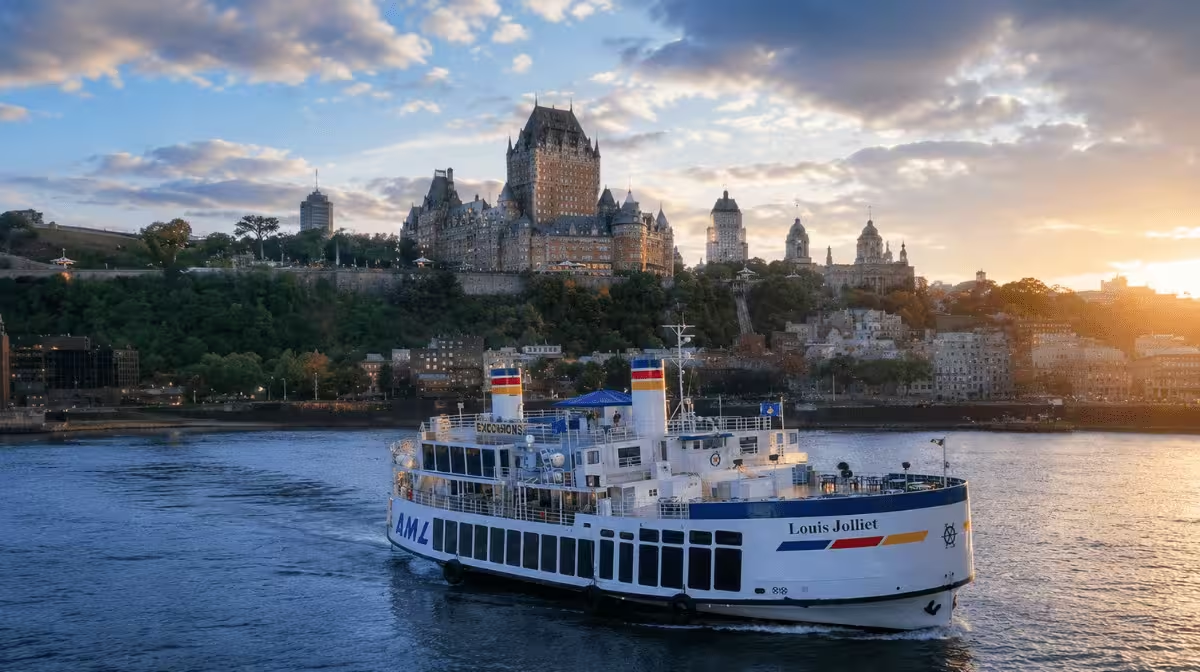
A river cruise Quebec City visitors consistently overlook is the one that reverses the angle entirely. Most people photograph the Château Frontenac from Terrasse Dufferin and never think to get on the water — but the St. Lawrence River sightseeing cruise takes you out onto the river and lets you look back at the cliff, the castle, and the city from the perspective that Samuel de Champlain had in 1608 when he was deciding where to build his settlement. The view from the river is the one that makes sense of the city’s geography: the immensity of the St. Lawrence, the drama of Cap Diamant rising above it, the fortification walls following the escarpment. This guide covers the cruise options from Quebec City, what to expect on board, the route, and how to fit it into a two-day visit.
Affiliate disclosure: This post contains affiliate links. We may earn a small commission if you book through our links, at no extra cost to you.
Contents
St. Lawrence River Cruise — Quick Facts
Why the River View Matters
Quebec City is a city built to be seen from the water. Samuel de Champlain chose this precise location in 1608 because Cap Diamant — the great promontory above the St. Lawrence — gave him control of the river narrows. Every ship travelling between the Atlantic and the interior of the continent had to pass within range of his cannon. The cliff was the strategic advantage that made Quebec City the most significant settlement in New France.
That same geography means the city is significantly more dramatic from the water than from anywhere on land. Standing on Terrasse Dufferin you see the Château Frontenac and the St. Lawrence below. From the river you see the full scale of what Champlain was working with: a cliff rising 98 metres above the water, a city built on its edge, the fortification walls following the escarpment, and the whole ensemble reflected in one of the greatest rivers on the continent. The photographs from the water are also genuinely different to anything you can take on land — wider, more complete, with the full context of the geography in frame.
What You See on the Cruise
The standard sightseeing cruise runs 90 minutes and follows the St. Lawrence east from the Old Port before looping back. The route passes the following landmarks with bilingual commentary from an on-board guide throughout:
The first and most dramatic sight as you clear the pier — the full cliff face of Cap Diamant with the Château Frontenac above and Old Quebec’s stone buildings along the escarpment. The perspective you have been looking at from land, reversed entirely.
The star-shaped fortifications of the Citadelle are visible on the cliff top as you move east — the largest British fortification in North America, which from the river reads as part of the same cliff rather than a separate structure.
The north shore of the St. Lawrence east of the city — farmland, villages, and the beginning of the Laurentian foothills visible in the distance. The guide covers the agricultural history of the region and its relationship to the river economy.
Visible from the river as a white streak down the cliff face east of the city — the 83-metre falls that are 30 metres taller than Niagara. From the water you see them in context with the surrounding landscape, which is a different and arguably more impressive view than from the base or the suspension bridge.
The large island in the St. Lawrence east of Quebec City, connected to the north shore by bridge. The boat turns at the Île d’Orléans Bridge before heading back west. The island is visible from Terrasse Dufferin but reads very differently from the river — rural, low, and surrounded by the full width of the St. Lawrence on both sides.
The return leg passes the Saint-Charles River mouth and brings you back alongside the Old Port and the Lower Town waterfront — a second pass at the city skyline from a slightly different angle and in different light if you are on the afternoon or evening departure.
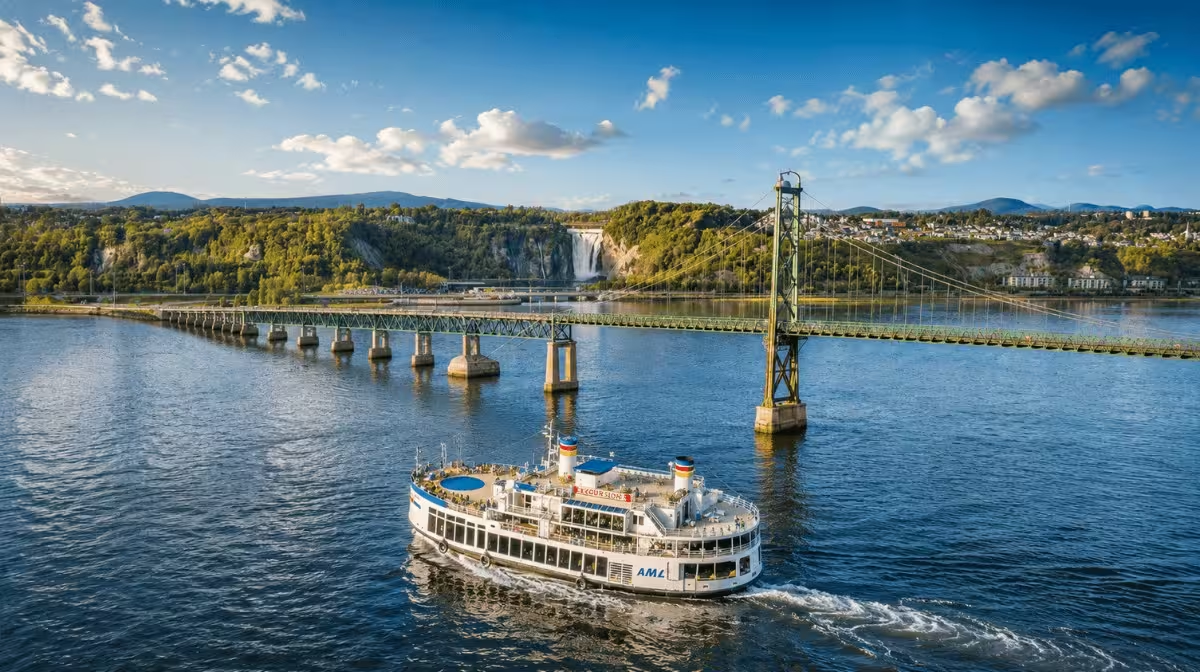
The cruise passes Montmorency Falls on the eastbound leg — visible from the river as a white curtain down the cliff face, 30 metres taller than Niagara.
The OptionsWhich Cruise to Book
Best OverallGuided Sightseeing Cruise — AML Louis Jolliet
The standard sightseeing cruise on the AML Louis Jolliet is the one to book. It departs from Chouinard Pier at the foot of Petit-Champlain, runs the full route described above with live English and French commentary from a certified guide, and has both indoor seating and open outdoor terraces. The audio guide is downloadable in a further six languages — Italian, Spanish, German, Mandarin, Japanese, and Korean — for those who prefer the self-guided option. Multiple departures daily in peak season; morning and afternoon are the best for photography.
Sunset and Evening Cruise
The evening departure runs the same route but in different light — the Château Frontenac lit from below, the south shore mountains in silhouette, the city’s reflection on the river at dusk. From September onward the evening cruise switches from guided commentary to ambient music, making it a considerably more relaxed and romantic experience. The best option for a second evening in Quebec City when you want something different from sitting in a restaurant.
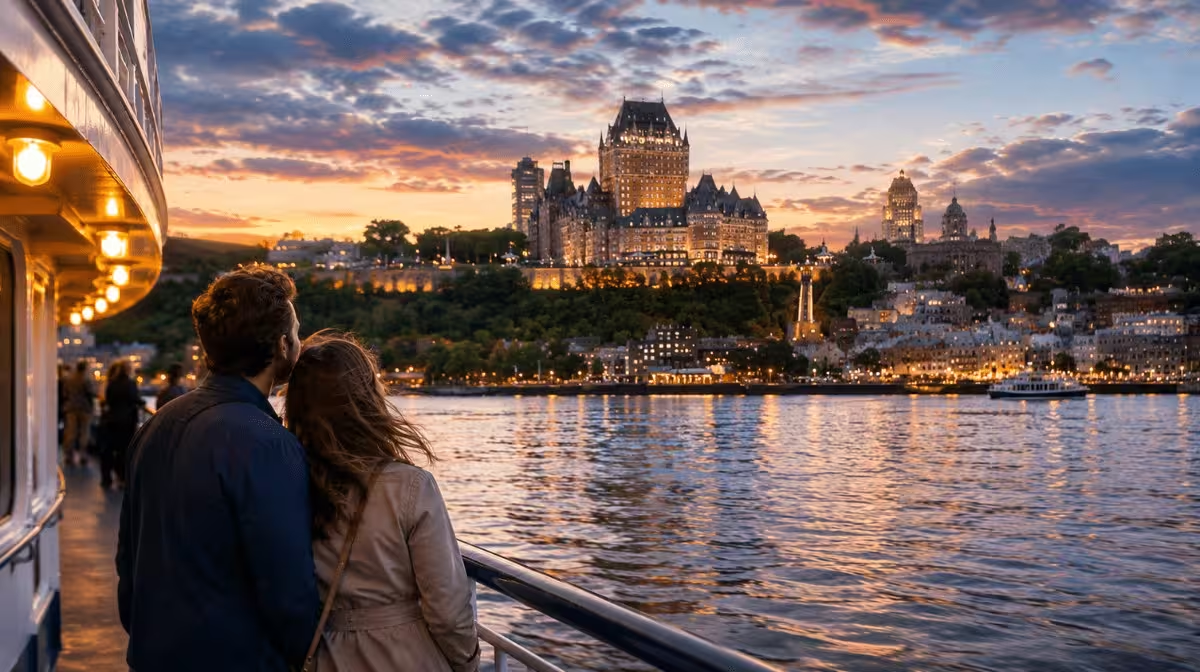
The evening cruise — Quebec City lit from below, the Château Frontenac above the cliff, the river catching the light on the return leg.
What to Expect On Board
The AML Louis Jolliet is a purpose-built river cruise vessel with multiple decks — enclosed lower decks with large windows and open upper terraces. The outdoor terraces are the place to be in good weather; the views are unobstructed and the photographs significantly better than through glass. In cooler weather or rain the enclosed decks are comfortable and the windows are large enough to see clearly. The cruise operates rain or shine unless adverse weather poses a genuine safety risk.
There is a bistro and bar on board serving food and drinks throughout the cruise. It is not a dinner cruise in the formal sense — more snacks and drinks than a full meal — but it is perfectly adequate for a late afternoon departure. Come with an appetite if you are on the evening sailing and plan to eat on board; come having already eaten if you are on the morning or afternoon cruise and want to concentrate on the views.
The Departure Point
Croisières AML departs from Chouinard Pier at 10 Rue Dalhousie in the Old Port — a ten-minute walk from Rue du Petit-Champlain along the waterfront promenade. The pier is in Lower Town, accessible from Upper Town via the funicular or the Breakneck Stairs. From anywhere in the historic centre, follow the signs to the Old Port and then walk east along the waterfront; the pier is clearly marked.
The ticket office is on the dock. If you have booked online, arrive at least 30 minutes before departure to collect your physical boarding pass — the boats board quickly once the queues form and do not wait for late arrivals.
When to GoBest Time for the Cruise
The cruise season runs from May through October. Summer (June to August) has the most departures and the warmest conditions, but the morning sailing is significantly less crowded than the afternoon on peak summer days. Autumn — September and October — is arguably the best time: the foliage on the Côte-de-Beaupré and the Île d’Orléans turns in late September, the crowd levels drop, and the evening light on the water is exceptional.
Morning departures are best for photography — the Château Frontenac faces roughly east and catches the morning light directly. Afternoon is pleasant and less rushed. The evening cruise is the most atmospheric but the least useful for photographs.
Before You Go
Where to Stay in Quebec City
Chouinard Pier is a ten-minute walk from the heart of Petit-Champlain and fifteen minutes from the Château Frontenac. Staying inside Old Quebec puts the departure point within easy reach without any transport logistics. The map below pulls live availability across the city for your dates.
Some links here are affiliate links. We may earn a small commission if you book through them, at no extra cost to you.
How long is the St. Lawrence River cruise from Quebec City?
The standard sightseeing cruise runs 90 minutes, departing from Chouinard Pier in the Old Port. The route passes the Château Frontenac, Cap Diamant, the Citadelle, Montmorency Falls, and Île d’Orléans before returning to the pier.
Is the St. Lawrence River cruise worth it in Quebec City?
Yes — the view of Quebec City from the river is the most complete perspective available anywhere in the city. The full height of Cap Diamant with the Château Frontenac above, the fortification walls along the escarpment, and Montmorency Falls in the distance are all visible from the water in a way that no land-based viewpoint can replicate.
Where does the Quebec City river cruise depart from?
Croisières AML departs from Chouinard Pier at 10 Rue Dalhousie in the Old Port — a ten-minute walk from Rue du Petit-Champlain along the waterfront. Arrive at least 30 minutes before departure to collect your boarding pass.
What is the best time to take the St. Lawrence River cruise?
Morning departures are best for photography — the Château Frontenac catches the morning light directly. Autumn (September and October) is the best season — foliage on the Côte-de-Beaupré and Île d’Orléans, fewer crowds, and exceptional evening light. The evening cruise from September onward switches to ambient music rather than commentary, making it more romantic and less structured.
Does the cruise operate in bad weather?
Yes — the cruise runs in most weather conditions. The enclosed lower deck means rain does not cancel the trip. Sailings are only cancelled in genuinely adverse conditions such as fog, high winds, or rough water. Free cancellation is included up to 24 hours before departure.
Is there food and drink on the St. Lawrence cruise?
Yes — the AML Louis Jolliet has a bistro and bar on board serving food and drinks throughout the cruise. It is not a formal dinner cruise, but snacks and drinks are available. The dinner cruise option is a separate, longer format available on select evenings.
What languages is the cruise commentary available in?
Live commentary is in English and French from the on-board guide. An audio guide is available to download in Italian, Spanish, German, Mandarin, Japanese, and Korean for self-guided listening.
Can I take the Québec-Lévis ferry instead of the cruise?
The ferry is a cheap and quick way to see the Quebec City skyline from the water — it crosses to the south shore town of Lévis in about 12 minutes and costs a few dollars. It is not a substitute for the sightseeing cruise since it does not follow the full route east to Montmorency Falls and Île d’Orléans, but it is a worthwhile add-on or low-cost alternative if the cruise is fully booked.