 Skip to content
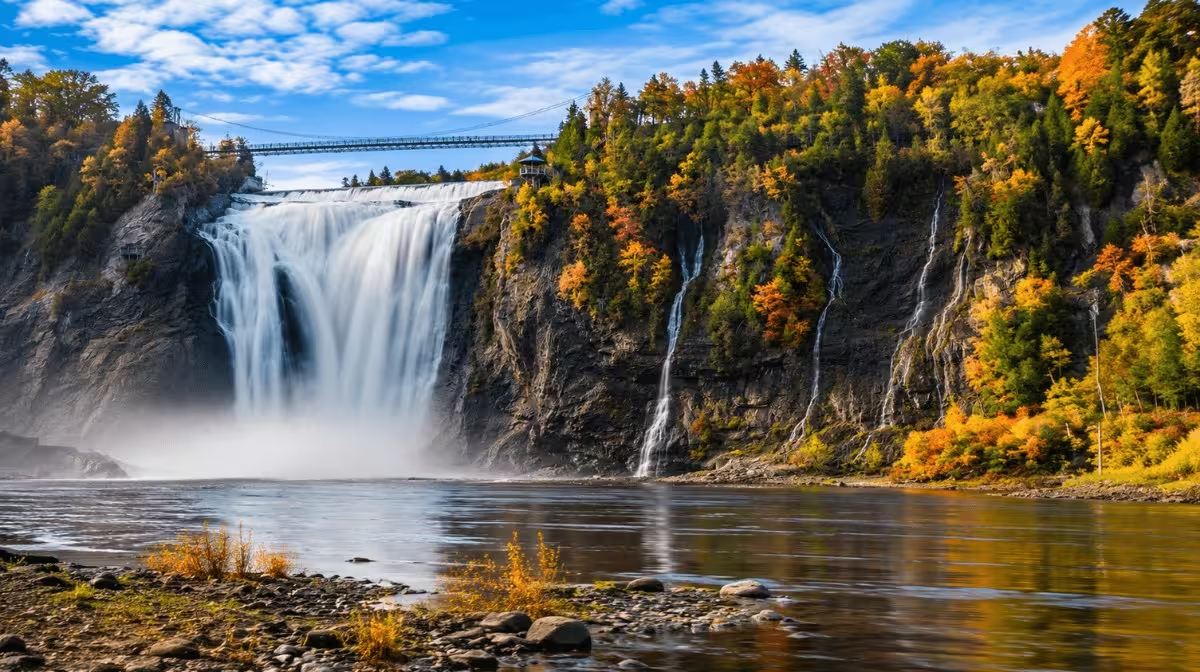
Montmorency Falls is the fact that surprises almost everyone who hears it: the falls are 83 metres high — 30 metres taller than Niagara. Most people have never heard of them. They sit 10 kilometres east of Quebec City’s old town, visible from the highway and from the St. Lawrence, and they are one of the most impressive natural sights in eastern Canada. This guide covers the day trip from Quebec City — how to get there, what to do when you arrive, when to go, and what to expect across every season.
Affiliate disclosure: This post contains affiliate links. We may earn a small commission if you book through our links, at no extra cost to you.
Contents
Montmorency Falls — Quick Facts
What Makes Montmorency Falls Worth the Trip
The falls drop off the Montmorency River as it meets the St. Lawrence, plunging 83 metres in a single curtain of water onto the rocky shore below. In summer the full volume of the river goes over — a broad, thunderous sheet that throws mist thirty metres in every direction and makes conversation difficult at the base. In winter the mist freezes into elaborate ice formations on the surrounding rock faces, and the famous Sugarloaf builds up at the base of the falls — a cone of ice formed by the freezing spray that Quebecers have been climbing for entertainment since the 18th century.
The falls were named by Samuel de Champlain in 1613 after Henri II de Montmorency, the Governor of New France. They have been a landmark and a point of civic pride ever since — the British General Wolfe used the area as a military camp during the siege of Quebec City in 1759, and the falls appear in almost every historical account of the city from that period onward. For most of that history they were simply there, a natural feature too large to ignore. It was only in the 19th century, when the Duke of Kent (Queen Victoria’s father) took up residence in the manor house above the falls, that Montmorency became a destination in its own right.

Montmorency Falls — 83 metres of falling water, 10 kilometres east of Old Quebec.
The manor house — now the Manoir Montmorency — still stands on the cliff above the falls and operates as a restaurant and visitor centre. The views from its terrace over the falls and the St. Lawrence are among the best in the Quebec City region.
Getting ThereHow to Get to Montmorency Falls from Quebec City
By Tour (Recommended)
The easiest way to get to Montmorency Falls without a car is the half-day guided tour from Quebec City — it departs from Old Quebec, handles all transport, and typically combines the falls with a stop at the Basilica of Sainte-Anne-de-Beaupré along the scenic Beaupré Coast. Morning and afternoon departures are available. It is the format this guide is built around, and it is by some distance the most practical option for visitors without a rental car.
By Car
From Quebec City, take Autoroute 440 East toward Beauport, then follow the signs for Parc de la Chute-Montmorency on Avenue Royale. The drive is 15 to 20 minutes from Old Quebec. Parking at the park is paid — arrive early in summer as the car park fills by mid-morning on weekends. The address for navigation is 2490 Avenue Royale, Beauport.
By Bus
The Réseau de transport de la Capitale (RTC) bus number 800 runs from Old Quebec along the Beaupré Coast and stops near the falls. The journey takes around 30 minutes. A day pass is the most economical option if you are using public transit elsewhere in the city. Check current schedules on the RTC website before travelling, as timetables vary by season.
What to Do at Montmorency Falls
The Panoramic Staircase
The 487-step staircase runs alongside the falls from the bottom of the gorge to the cliff top, with rest points and viewing platforms built in at intervals. The climb takes 20 to 30 minutes at a moderate pace and the views change significantly as you ascend — from the base looking up at the full drop, through mid-point views across the gorge, to the top where the river is visible flowing toward the edge. The staircase descends from the park entrance at the top; you walk down first and climb back up, or ascend and take the cable car down. Either way, it is the best way to experience the scale of the falls on foot.
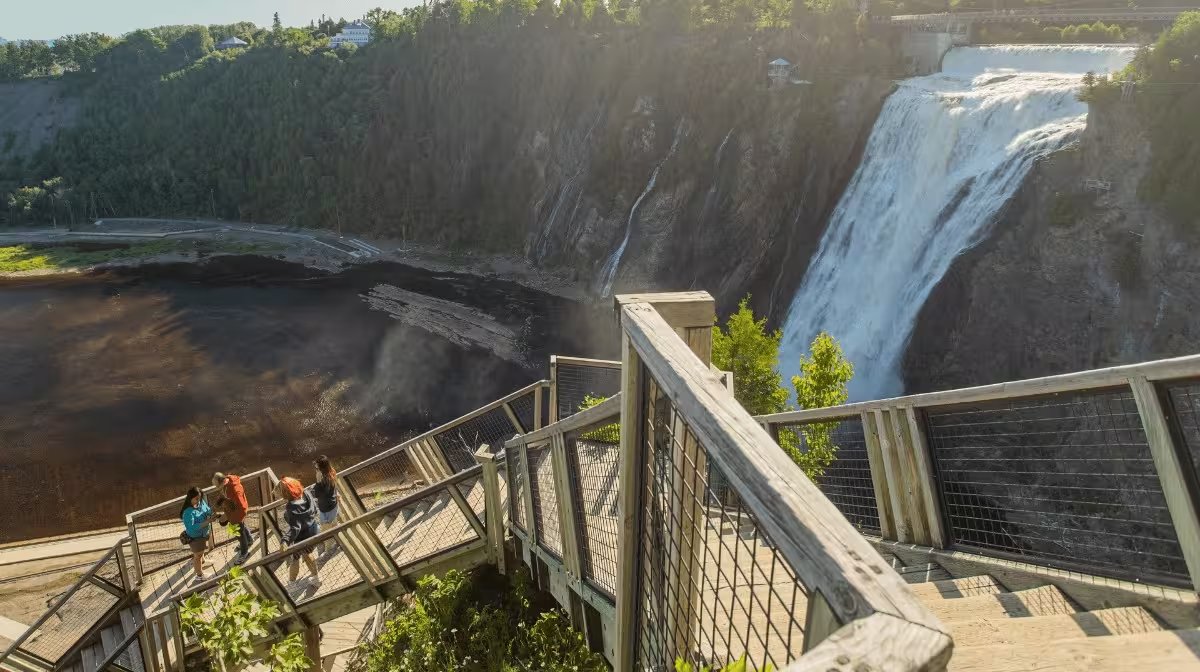
The 487-step panoramic staircase runs alongside the falls — rest points built in at every level.
The Suspension Bridge
A 98-metre footbridge crosses the gorge directly above the falls, giving you the view straight down into the cascade from above. It is the photograph most people come for — the falls dropping away beneath your feet, the St. Lawrence and Île d’Orléans visible in the distance. The bridge is included in the park entry and is the single best vantage point at the site. It can sway perceptibly in wind, which adds to the impression of standing above 83 metres of falling water.
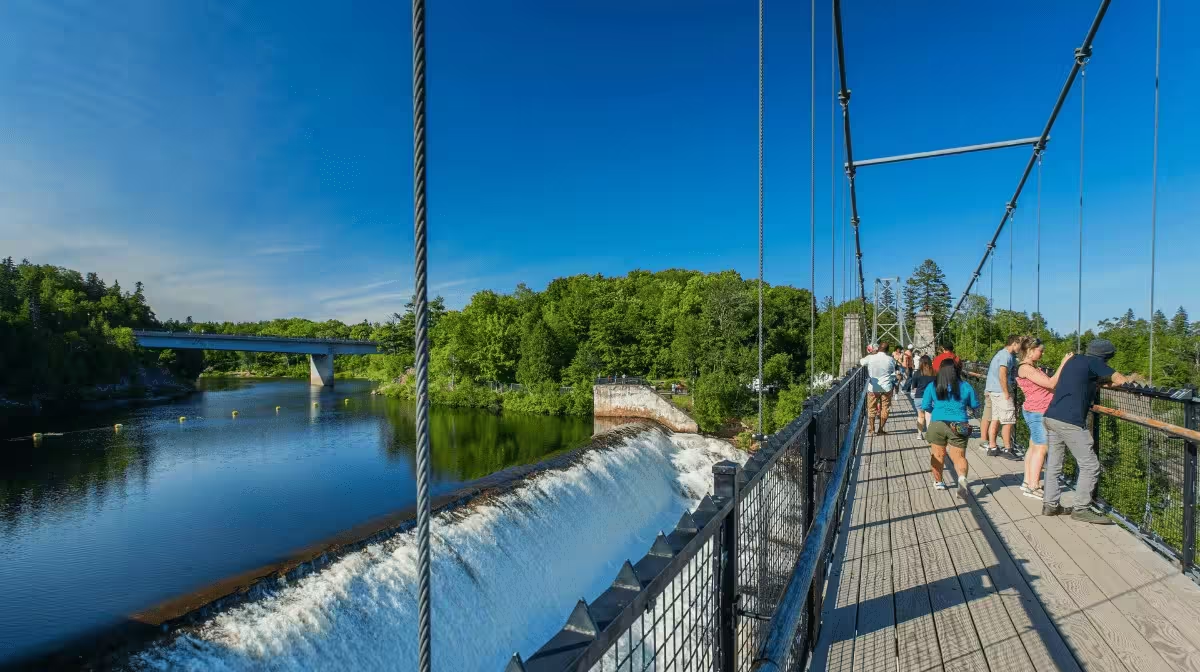
The 98-metre suspension bridge crosses directly above the falls — the best single vantage point at the site.
The Cable Car
A gondola cable car runs between the bottom of the gorge and the cliff top, providing the easiest way to move between the two levels without climbing the stairs. It operates during park opening hours and costs a small fee. Worth using at least once — the descent gives you a moving aerial view of the falls that neither the staircase nor the bridge can replicate.
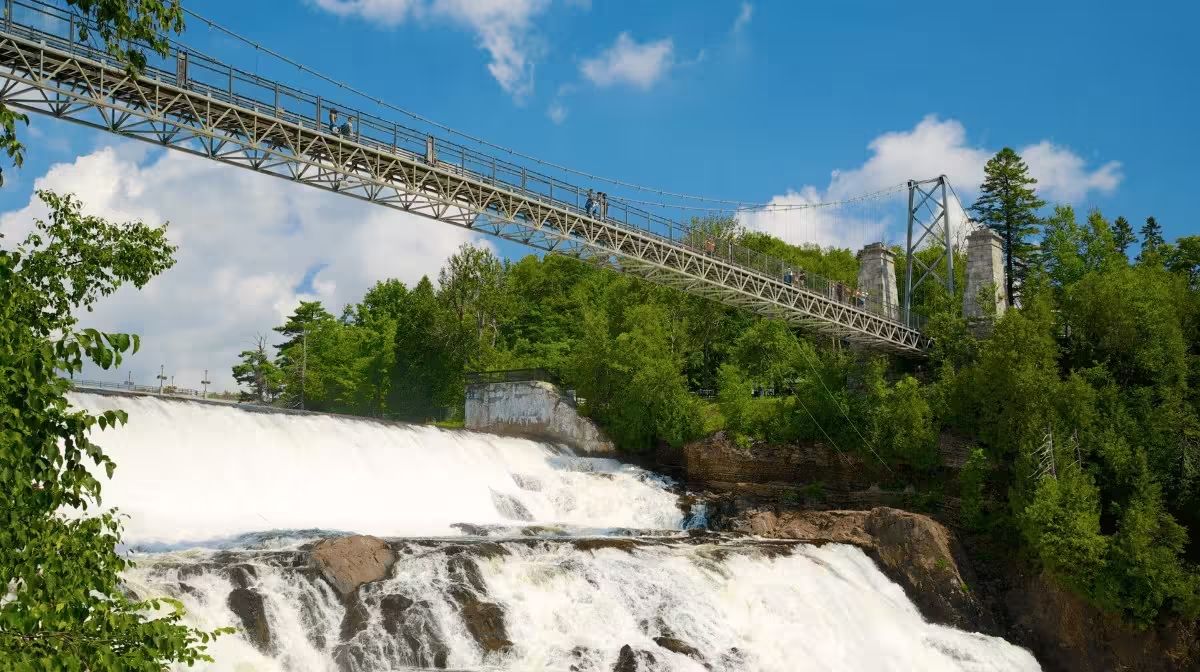
Looking out from the suspension bridge — the St. Lawrence and Île d’Orléans visible in the distance.
Manoir Montmorency
The historic manor house at the cliff top above the falls serves as a restaurant, café, and visitor centre. The terrace is the best outdoor lunch spot at the site — positioned directly above the falls with views across the St. Lawrence to Île d’Orléans and the south shore mountains. Worth a coffee stop at minimum; the restaurant is a reasonable option for a longer lunch if you are not on a tour schedule.
The Sugarloaf (Winter Only)
In winter, the spray from the falls freezes into a cone of ice at the base known as the Sugarloaf — pain de sucre in French. The cone builds up through December and January, reaching heights of up to 30 metres in cold winters, and locals have been climbing it for recreation since at least the 18th century. The climb is now a formalised winter activity with a groomed route and safety measures in place. It is one of the most distinctively Québecois experiences available anywhere in the city region and is the main reason to consider visiting Montmorency Falls in winter specifically.
The Half-Day TourThe Guided Half-Day Tour from Quebec City
The half-day tour is the recommended format for most visitors — particularly those doing the Quebec City 2-day itinerary who want to include Montmorency without the logistics of renting a car. The tour departs from Old Quebec and runs to the falls, allowing time at the site for the staircase, the suspension bridge, and the manor terrace before continuing along the scenic Beaupré Coast to the Basilica of Sainte-Anne-de-Beaupré. Return to the city is included.
Morning departures are preferable for light and crowd levels. The tour typically runs four hours total — enough time at the falls for a proper visit without feeling rushed, and enough time at Sainte-Anne-de-Beaupré to walk the interior of the basilica and understand what makes it one of the most significant pilgrimage sites in North America. Book at least 48 hours ahead in summer; morning slots fill faster than afternoon.
Basilica of Sainte-Anne-de-Beaupré
The Basilica of Sainte-Anne-de-Beaupré sits 35 kilometres east of Quebec City on the Beaupré Coast — a short drive beyond Montmorency Falls along the north shore of the St. Lawrence. It is one of the oldest and most important Catholic pilgrimage sites in North America, drawing over a million visitors a year. The current basilica was completed in 1934 in a Romanesque Revival style that fills the interior with stained glass, mosaic floors, and an accumulated weight of religious art that takes time to absorb properly.
The site’s significance dates to 1658, when a chapel was first built here after local sailors attributed their survival from a storm to Sainte Anne’s intercession. Miraculous healings were reported soon after, and the site has been a pilgrimage destination ever since — the discarded crutches and walking aids displayed near the entrance are a striking and slightly unsettling introduction to the building’s history. Whether or not the religious dimension resonates, the basilica is architecturally impressive and the surrounding grounds offer good views of the St. Lawrence.
When to GoMontmorency Falls by Season
June to August. Full water volume, lush green surroundings, all facilities and activities open. Most crowded season — arrive early. Best overall conditions for a first visit.
September to November. Foliage colours on the surrounding hills, smaller crowds, cooler temperatures. The falls read particularly well against the autumn colour. Excellent shoulder season choice.
December to March. Ice formations on the rock faces, the Sugarloaf at the base. The toboggan run operates. A completely different experience — dramatic, cold, and far quieter than summer.
April to May. Snowmelt pushes the falls to their highest water volume of the year. Impressive but cold, with some facilities still opening for the season. Worth considering if maximum flow is the priority.
Everything You Need to Know Before You Go
Where to Stay in Quebec City
Montmorency Falls is a day trip, not an overnight destination — stay in Quebec City and make the trip from there. The map below pulls live availability across the city for your dates.
Some links here are affiliate links. We may earn a small commission if you book through them, at no extra cost to you.
Is Montmorency Falls bigger than Niagara?
Yes — Montmorency Falls is 83 metres high, which is 30 metres taller than the Horseshoe Falls at Niagara. Niagara is considerably wider and carries a much larger volume of water, but in terms of height, Montmorency is the taller waterfall by a significant margin.
How far is Montmorency Falls from Quebec City?
Approximately 10 kilometres east of Old Quebec, in the borough of Beauport. By car the drive takes 15 to 20 minutes. The half-day guided tour from Old Quebec includes transport and takes approximately four hours in total including the stop at Sainte-Anne-de-Beaupré.
Is Montmorency Falls worth visiting?
Yes — it is one of the most impressive natural sights in eastern Canada and is consistently underrated because it lacks the global name recognition of Niagara. The staircase, suspension bridge, and winter ice formations make it an active and varied visit rather than simply a lookout stop. It fits naturally into a two-day Quebec City visit as a Day 2 morning excursion.
Can you visit Montmorency Falls without a car?
Yes. The half-day guided tour from Old Quebec handles all transport and is the recommended option for visitors without a rental car. The RTC city bus also runs to the falls from Quebec City, though the tour format is more convenient and includes the Sainte-Anne-de-Beaupré stop.
What is the Sugarloaf at Montmorency Falls?
The Sugarloaf (pain de sucre) is a cone of ice that forms at the base of the falls in winter from the freezing spray. It builds up through December and January, reaching heights of up to 30 metres in cold winters. Climbing it is a traditional Québecois winter activity and one of the most distinctive experiences the site offers.
How long do you need at Montmorency Falls?
Two hours is enough for a comfortable visit — time for the staircase or cable car, the suspension bridge, the base viewpoint, and a coffee at Manoir Montmorency. The half-day tour format allows approximately this much time at the falls before continuing to Sainte-Anne-de-Beaupré.
What is the best time to visit Montmorency Falls?
Summer gives the best overall conditions — full water volume, all facilities open, lush surroundings. Winter is worth considering specifically for the Sugarloaf and the ice formations, which are a completely different experience. Autumn foliage makes September and October particularly scenic. Spring has the highest water volume but cold temperatures and some facilities still opening for the season.
Is entry to Montmorency Falls free?
Yes — entry to Parc de la Chute-Montmorency is free. The staircase, suspension bridge, and cliff-top viewpoints are all accessible at no charge. The cable car costs a small fee. Parking costs extra if you are driving independently. The half-day tour price covers all transport and park access.
What a spectacular waterfall! Montmorency Falls looks absolutely breathtaking.