 Skip to content
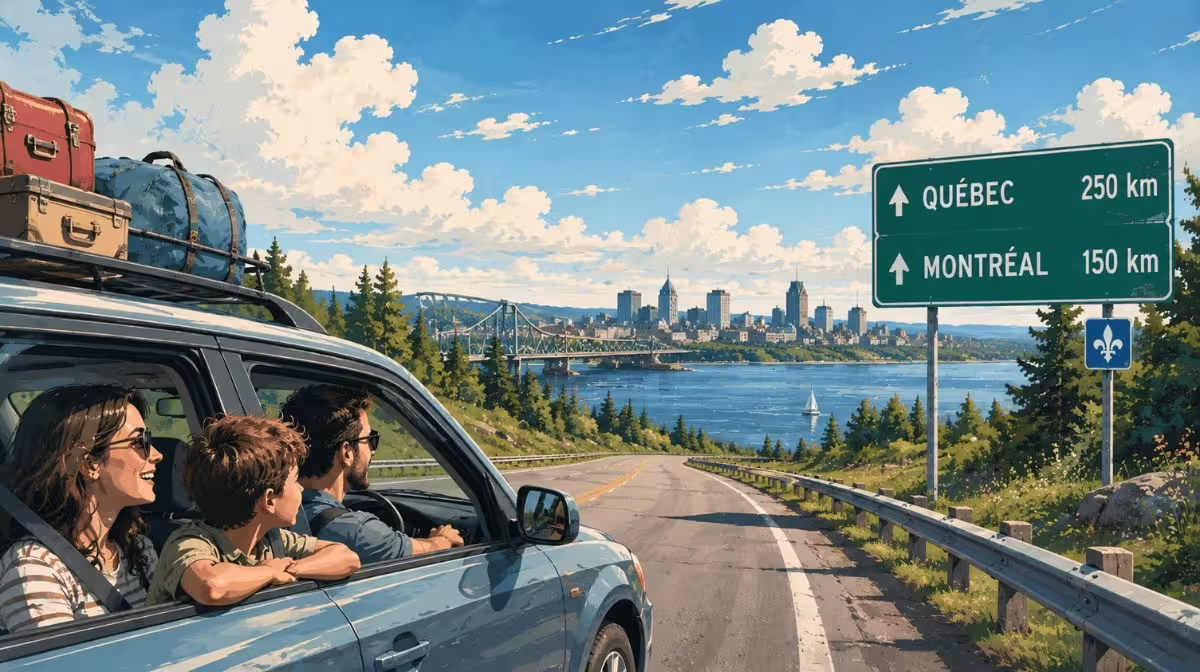
The Quebec City to Montreal drive is one of the most satisfying short road trips in Canada — 255 kilometres of St. Lawrence Valley landscape, two of the most historically distinct cities on the continent, and just enough distance to feel like a proper journey rather than a commute. This guide covers the direct route, the best stops along the way, what to see in both cities, and how to structure the drive whether you are doing it in a single day or building a longer Canada road trip around it.
Affiliate disclosure: This post contains affiliate links. We may earn a small commission if you book through our links, at no extra cost to you.
Contents
Quebec City to Montreal — Quick Facts
The Route: Quebec City to Montreal
The standard route is Autoroute 20 West — a divided highway that runs along the south shore of the St. Lawrence from Quebec City to Montreal, crossing the river at Pont Pierre-Laporte just outside Quebec City and arriving in Montreal via the Champlain Bridge or the Pont Victoria depending on your destination in the city. Non-stop, the drive takes approximately 2.5 hours in normal traffic conditions.
The alternative is Route 138 along the north shore — a slower, considerably more scenic route that stays close to the St. Lawrence through the villages of Portneuf, Deschambault, Grondines, and Batiscan before joining the autoroute system near Trois-Rivières. If you have the time, the north shore route adds an hour to the journey and removes the motorway entirely from the experience. Worth it for the landscape alone.
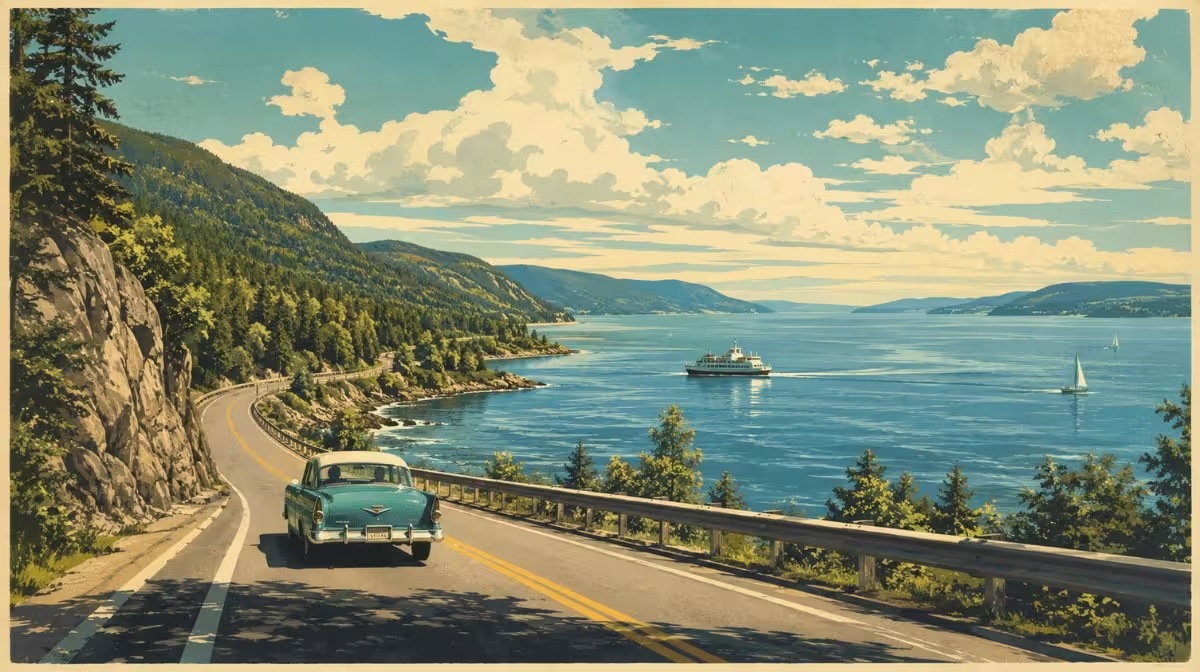
The scenic Route 138 follows the St. Lawrence through peaceful villages, farmland and some of Quebec’s most beautiful river landscapes.
Best Stops Between Quebec City and Montreal
The town directly across the St. Lawrence from Quebec City, reachable by a free 12-minute ferry from the Old Port. The view of Quebec City’s skyline from the Lévis waterfront — the Château Frontenac above the cliff, the fortification walls following the escarpment — is one of the best in the region and impossible to get any other way. Worth a 45-minute stop if you are leaving Quebec City in the morning and the ferry timing works.
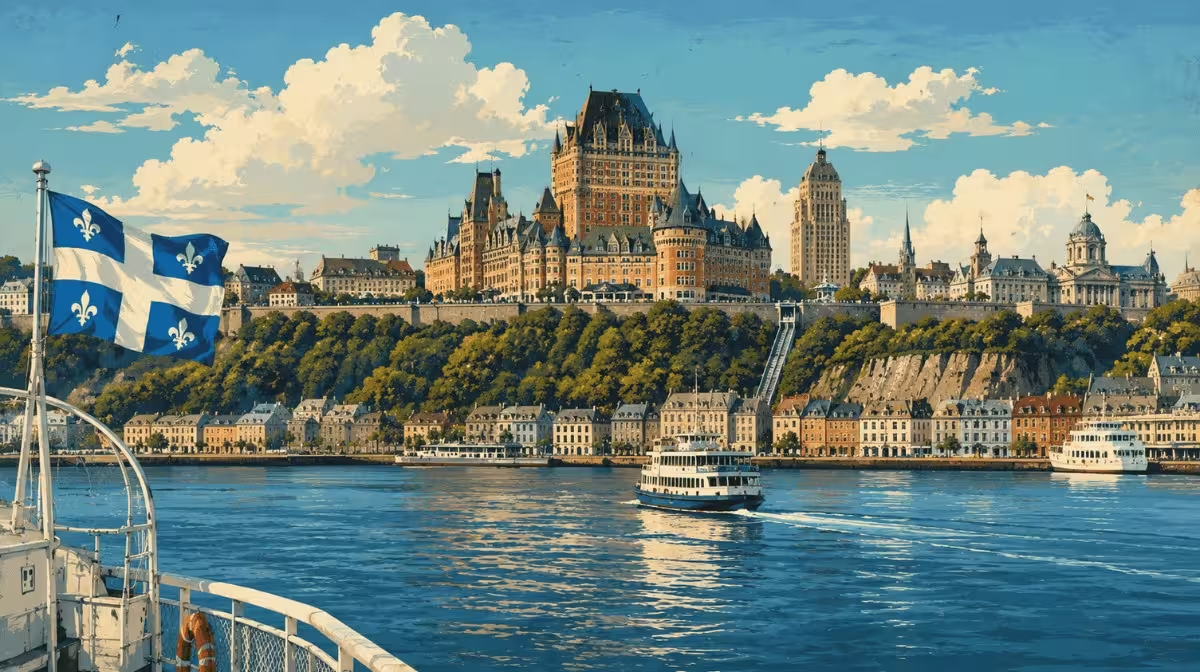
From the Lévis waterfront, Château Frontenac dominates one of the most iconic skylines anywhere in Canada.
The natural midpoint of the drive and the third largest city in Quebec — often overlooked because it sits between two more famous destinations. The old town (Vieux-Trois-Rivières) is genuinely worth a stop: well-preserved 17th and 18th century buildings, the Cathedral of the Assumption, and the waterfront along the St. Lawrence. The Pulperie de Chicoutimi museum covers the city’s industrial history as the world’s largest paper-producing city in the early 20th century. Allow an hour if you stop here.
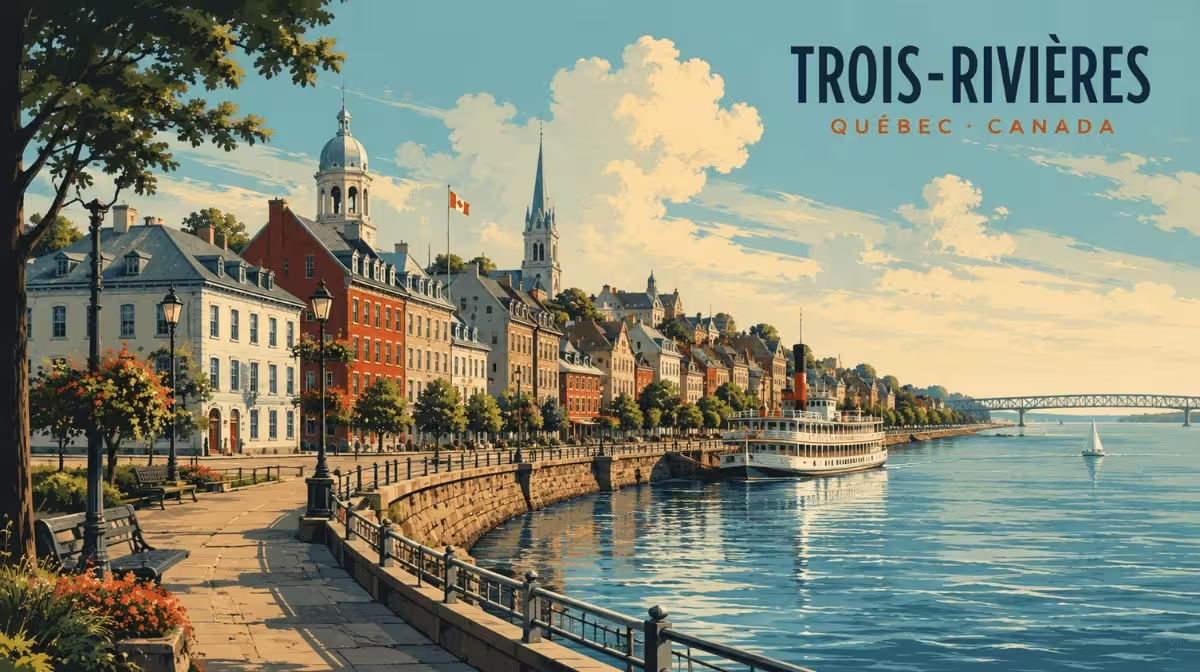
Historic Trois-Rivières makes an ideal halfway stop between Quebec City and Montreal, combining riverfront views with one of Quebec’s oldest town centres.
A pair of villages on the north shore Route 138 that represent some of the most intact 18th century Quebec architecture in the province. The Old Mill of Deschambault is the standout — a restored 1762 flour mill with an excellent café — but the villages themselves are worth the slow drive-through. This stop only makes sense on the scenic north shore route.
Depending on where you are staying in Montreal, the approach from the A20 drops you into the west end of the island — passing through Dorval and LaSalle before the bridge crossing. If Old Montreal is your destination, follow signs for the Pont Champlain and take Autoroute 10 to Boulevard Saint-Laurent. For the Plateau or Mile End, continue on A20 to the A720 and exit onto the surface streets.
Autoroute 20 (South Shore) vs Route 138 (North Shore)
Autoroute 20 — The Fast Route
The A20 is the route to take if you are short on time or driving in poor weather. Fully divided highway, excellent rest stops including service areas at Saint-Nicolas and Drummondville with decent café and fuel options, and no navigational complexity. The St. Lawrence is visible from the road at several points but you are never right beside it. Trois-Rivières is easily accessible via exit 180 if you want a midpoint stop without leaving the highway system.
Route 138 North Shore — The Scenic Route
Route 138 leaves Quebec City via the north shore of the St. Lawrence, passing through Neuville, Portneuf, Deschambault, Grondines, and Batiscan before joining the A40 near Trois-Rivières and continuing to Montreal. The landscape along this route — the river to your right, the Laurentian foothills to your left, the traditional Quebec farmhouses and village churches every few kilometres — is the most authentically rural Quebec you can see from a car without going significantly out of your way.
Getting Out of Quebec City
If you are leaving from Old Quebec, the easiest exit for the A20 south shore route is via Boulevard Champlain along the waterfront from Lower Town, following signs for Pont Pierre-Laporte. The bridge gives you a final elevated view of Old Quebec’s skyline before the city disappears in the rear-view mirror — worth noting the time of day for the light.
For the north shore Route 138, leave via the lower city along Boulevard des Capucins or Avenue Royale heading east, then follow Route 138 signs west once you are past the city’s eastern suburbs. The route will take you past the Montmorency Falls area — if you have not already visited, this is a natural stop on the way out of the city. The falls are visible briefly from the road just east of the city.
Before leaving Quebec City, make sure you have seen everything on your list — the Château Frontenac, the Old Quebec neighbourhoods, and the Plains of Abraham if history is your interest. The city rewards time and it is a genuinely long drive back if you forget something.
Arriving in MontrealGetting Into Montreal
Montreal sits on an island in the St. Lawrence, connected to the south shore by several bridges. The Pont Champlain (rebuilt and reopened as the Samuel De Champlain Bridge) is the main entry point from the A20 and is the most straightforward approach to Old Montreal, the Plateau, and the city centre. The Pont Jacques-Cartier further east brings you into the eastern part of the island and is better for the Gay Village and Rosemont areas.
Parking in Montreal is available but expensive in the central neighbourhoods. If you are staying in Old Montreal or the Plateau, check whether your hotel has parking before arrival — many properties in the historic centre do not. The Vieux-Port underground parking on Rue de la Commune is the most convenient option for Old Montreal if you need to leave the car for an extended period.
Once you are in, the city is best navigated on foot and by metro. The STM metro system covers all the main neighbourhoods efficiently and inexpensively — buy a multi-day pass if you are staying more than one night. Our full Montreal travel guide covers the city’s neighbourhoods, best restaurants, and what to see in detail.
Train AlternativeQuebec City to Montreal by Train
Via Rail runs several trains daily between Quebec City’s Gare du Palais and Montreal’s Gare Centrale. The journey takes approximately three hours — slightly longer than driving, but considerably more relaxed, with no parking to worry about at either end. The train deposits you in the underground city directly below Montreal’s main shopping and hotel district, connected by underground passages to much of the city centre.
Via Rail fares vary significantly by booking date and class — booking two to three weeks ahead gives you reasonable economy fares; last-minute booking can be expensive. Business class on this route includes a meal and considerably more space, and is worth considering for the three-hour journey if the price difference is modest. Check the Via Rail website directly for current schedules and fares.
Before You Drive
Where to Stay
The map below shows live availability across both Quebec City and Montreal for your dates — useful if you are booking the full route in one session.
Some links here are affiliate links. We may earn a small commission if you book through them, at no extra cost to you.
How long is the drive from Quebec City to Montreal?
Approximately 2.5 hours non-stop on the Autoroute 20 south shore route — 255 kilometres. The scenic north shore Route 138 adds approximately one hour. With a midpoint stop in Trois-Rivières, allow 4 to 4.5 hours for the full journey.
What is the best route from Quebec City to Montreal?
For speed, the Autoroute 20 along the south shore is the standard route — fully divided highway, straightforward navigation, and 2.5 hours non-stop. For scenery, Route 138 along the north shore stays close to the St. Lawrence through traditional Quebec villages. The best approach combines both: take Route 138 north shore to Trois-Rivières, cross via the Pont Laviolette, and join the A20 for the remainder.
Is there a train from Quebec City to Montreal?
Yes — Via Rail runs several trains daily between Quebec City’s Gare du Palais and Montreal’s Gare Centrale. The journey takes approximately three hours. Book two to three weeks ahead for the best economy fares.
What is worth stopping at between Quebec City and Montreal?
Trois-Rivières is the main stop — the old town is worth an hour and it sits exactly at the midpoint of the drive. On the north shore route, Deschambault-Grondines has excellent 18th century village architecture and the Old Mill café. The Lévis ferry from Quebec City (before you start driving) gives you the best view of Quebec City’s skyline from the water.
How far is Quebec City from Montreal?
255 kilometres by road on the Autoroute 20. The straight-line distance is approximately 235 kilometres — the road follows the St. Lawrence Valley rather than going direct.
Is Quebec City to Montreal part of a longer road trip?
Yes — it is the second leg of the classic Canada road trip route: Boston → Quebec City → Montreal → Ottawa → Toronto → New York. At 255 kilometres it is the shortest leg of the route and works well as either a half-day drive with stops or a full day with an overnight in Trois-Rivières.
What are winter driving conditions like between Quebec City and Montreal?
The A20 is well maintained in winter but conditions can change quickly. Winter tires are legally required in Quebec from December 1 to March 15. Check Environment Canada road conditions before departing in winter months, and allow extra time for reduced speeds and potential delays.
Where should I stay in Montreal after driving from Quebec City?
Old Montreal for the most atmospheric base — cobblestone streets, river views, and the historic centre within walking distance. The Plateau for the most local experience and the best restaurant scene. Our Montreal travel guide covers all the neighbourhoods in detail.