 Skip to content

She meets you before Manhattan does. Long before the skyline resolves into individual towers, there’s a flash of green on a small island dead ahead — torch raised, head tilted slightly toward the horizon, as if she’s still watching for the ships. Here’s how to see the Statue of Liberty properly: every real way to reach her, up close, from the water, from the air, or for free.
Here’s the thing nobody tells you before you book: there isn’t one “Statue of Liberty visit.” There are at least eight, and they range from a free 25-minute ferry ride you can hop on tonight to a reservation you need to lock in before you’ve even booked your flights. This guide walks through every legitimate way to see her — up close, from the water, from the air, for free, or all the way from the harbor floor to the spikes of her crown — so you can pick the one that actually fits your trip. And since I climbed all the way to the crown myself this July, there’s some first-hand detail woven in too — not just the official version.
This guide contains affiliate links. If you book through them, we may earn a small commission at no extra cost to you — it doesn’t change the price you pay or which option we recommend.
Just want to book the ferry?
Skip the full guide — here’s the official Statue City Cruises ticket (Reserve, Pedestal, or Crown, selected at checkout).
My Visit: From a Distant Glimpse to the Crown

The Statue of Liberty ended up becoming something of a bookend to my three-week summer road trip this July. I started and finished the trip in New York City, with a loop through Boston, Vermont, Quebec City, Montreal, Toronto, Niagara Falls, the Finger Lakes, Washington DC, and Philadelphia in between. Strangely enough, Lady Liberty showed up at both ends of the adventure — and I saw her in a completely different way each time.
A Distant First Glimpse From Brooklyn
On my first day in the city, I only saw her from a distance while wandering around the Brooklyn Bridge — tiny, sitting out in the harbor, but still one of those “I’m actually in New York” moments you don’t expect to hit as hard as it does. You’ve seen that silhouette in movies and photos your whole life; spotting it for real is its own small thrill.
Free Views From the Staten Island Ferry
The next day, budget-conscious and curious, I took the free Staten Island Ferry — and it’s one experience I’d recommend to genuinely anyone visiting on a budget. You don’t stop at Liberty Island, but the ferry passes close enough for excellent photos, and I appreciated the scale of the statue far more from the water than I had from Brooklyn. The boat is enormous and multi-level; I half-expected to spend the whole ride looking over people’s heads, but everyone spreads out and there’s plenty of room at the rail. The views back toward the Manhattan skyline are almost as good as the ones toward the statue, so don’t spend the whole crossing facing one direction.
One thing I learned the annoying way: you can’t stay on board when the ferry reaches Staten Island. Everyone has to get off and re-board a separate boat for the return trip. We took our time, missed the return ferry by a few seconds, and waited about 30 minutes for the next one. Not a disaster — but budget a little slack if you’re trying to fit a lot into the day.
Coming Back — This Time Going Inside
By the end of the road trip, back in New York, I didn’t want another distant view — I wanted the real thing. I booked an early ferry from Battery Park and headed for Liberty Island. After security, I went straight for the open upper deck. As the ferry pulled away, the skyline opened up behind us and the statue started getting bigger. And bigger. I’d already seen her from Brooklyn and from the Staten Island Ferry, but the approach to Liberty Island is a different experience entirely — there’s a point in the crossing where she stops looking like a distant landmark and starts looking enormous. I took far too many photos. Everyone on that boat did.
Standing Beneath Her, Then Climbing Inside
Once we docked, I walked the short path to the statue itself — seeing it from ground level is a different kind of scale entirely; you’re no longer looking across the harbor at an icon, you’re standing underneath it. Because I had pedestal and crown access, there was a second security check before entering, separate from the one at Battery Park — anything that couldn’t come inside went into a locker first.
I took the elevator most of the way up the pedestal, then climbed the final stretch to the outdoor observation deck — for pure views, this was honestly my favorite part of the whole visit. You can walk the full loop and look out across the harbor toward Manhattan, Brooklyn, New Jersey, and Ellis Island, then look straight up and find yourself practically standing beneath the statue’s feet and robe. That angle is genuinely surreal.
But the pedestal wasn’t the final stop — I still had 162 more steps to the crown.
Climbing Inside the Statue
A ranger checked my crown ticket and pointed me toward a narrow spiral staircase leading up inside the statue. This is where it stops feeling like a normal observation deck. The stairs are steep, narrow, metal, and spiral tightly upward, mostly single-file with one hand on the railing the whole way. I’m not usually claustrophobic, but there were a couple of moments where the space felt genuinely tight. It’s also the most fascinating part of the climb — you can see the copper skin right beside you, along with the bolts and internal framework holding the whole statue together. The famous green figure you’ve seen your whole life from the outside suddenly becomes a piece of engineering, and you’re inside it.
The crown itself is smaller than I expected — a row of small windows, limited capacity, restricted views rather than a panoramic deck. That’s not really the point, though. The point is realizing where you’re standing: inside the Statue of Liberty’s head, looking out through those little windows across New York Harbor. Coming back down was harder for me than going up — the open metal staircase feels a lot higher looking down through it, and my stomach wasn’t thrilled. Eyes on the steps, one hand on the rail, slow and steady.
“You’re inside the Statue of Liberty’s head, looking out through those little windows across New York Harbor. That’s a sentence I never expected to be able to write.”
Would I Climb to the Crown Again?
Probably not — and I don’t mean that negatively. It’s one of those experiences I’m extremely glad I did once. The staircase is awkward, the space is tight, and the views from the crown itself aren’t the sweeping panorama some visitors expect. If pure harbor views are what you’re after, I actually think the pedestal delivers the better experience. But very few landmarks anywhere let you climb inside them, and the crown gives you something the pedestal simply can’t. The moment that stays with me isn’t the view through the windows — it’s the whole arc of it: a tiny silhouette from Brooklyn, a free crossing on the Staten Island Ferry, and three weeks later, watching her grow larger from the boat, standing beneath her, and climbing through that copper shell to stand, for a few minutes, inside her head. Most visitors only ever see her from the outside. Getting to do both is what made this one stick.
A Gift, a Promise, a Statue
The idea came from a dinner party. In 1865, the French historian Édouard de Laboulaye — an admirer of the United States who despised his own country’s authoritarian drift under Napoleon III — floated the idea of a monument that France would eventually give to America, timed to the coming centennial of American independence, as a shared statement about liberty on both sides of the Atlantic. Two decades, one Franco-Prussian War, and a great deal of fundraising later, that dinner-table idea was standing in New York Harbor.
The sculptor was Frédéric-Auguste Bartholdi, who built her in Paris out of hammered copper sheets — 300-plus of them, each barely thicker than two pennies stacked together — hung on an iron skeleton engineered by a young Gustave Eiffel, a few years before he’d build the tower that made his name a household word. She was completed in France in 1884, taken apart into 350 pieces, packed into more than 200 crates, and shipped across the Atlantic on the frigate Isère. The pedestal she’d stand on, funded separately by American donations, was still unfinished when she arrived — it took a newspaper fundraising campaign led by Joseph Pulitzer, which pulled in small donations from more than 120,000 ordinary Americans, to finally get it built.
On October 28, 1886, in front of a soaked, cheering crowd and a harbor full of ships blasting their horns, President Grover Cleveland dedicated her as “Liberty Enlightening the World.” Bartholdi himself climbed up to release the French flag draped over her face. For the next several decades she also worked as a functioning lighthouse, her torch visible from 24 miles out to sea, before the job was handed to the U.S. Lighthouse Service and then, in 1933, to the National Park Service, which still runs the island today.
The part most visitors don’t know: you can no longer go inside the torch. A 1916 sabotage attack on a nearby munitions depot — the Black Tom explosion, one of the largest acts of sabotage on American soil before 9/11 — rattled the statue badly enough that the torch has been closed to the public ever since. What you climb to today is the crown, 354 steps up, a very different and slightly less mythologized part of her anatomy — but still the closest you can legally get to the flame she’s been holding for well over a century.
A sonnet is bolted to the pedestal, too — Emma Lazarus’s 1883 poem “The New Colossus,” written to help raise money for that same pedestal fund. It’s the reason a French monument to Franco-American friendship became, in the American imagination, something else entirely: the first sight of the country for millions of immigrants arriving through Ellis Island next door, and the reason her welcome now reads as being extended to the poor and the exhausted as much as to any nation-state.
Lady Liberty at a Glance
How to See the Statue of Liberty: Every Option, Compared
Now that you know her story — here’s how to see the Statue of Liberty for yourself. From a free harbor crossing to a reservation you need to make months out, here’s how each option actually works, roughly ordered from “book it this week” to “plan ahead.”
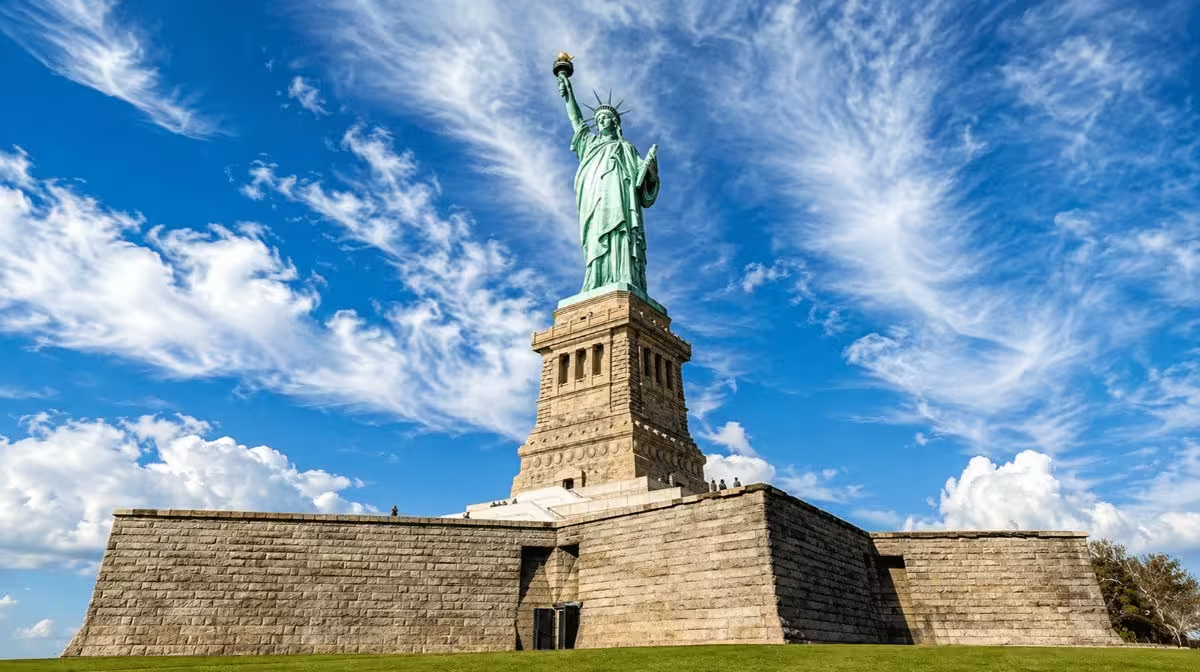
General Reserve Ticket — Liberty & Ellis Islands
From $25.50 (adult) · round-trip ferry + both islands + museums included
This is the standard visit, and honestly, it’s the one most people should book. It gets you a round-trip ferry from either Battery Park in Manhattan or Liberty State Park in New Jersey, full access to the grounds of Liberty Island, a stop at Ellis Island, entry to the Statue of Liberty Museum and the Ellis Island Immigration Museum, and a free audio tour narrated to Park Service standards — genuinely good enough that you don’t need a paid guide on top of it. You won’t go inside the pedestal or climb to the crown, but you’ll get right up to the base, and for most visitors that’s plenty.
Pedestal Reserve
Same base price + $0.30 · book at least two weeks ahead
For thirty cents more than the general ticket, you get access inside the pedestal itself and an elevator up to the observation deck — about ten stories up, level with the bottom of the statue’s robe, with wide-open harbor and skyline views and a much better sense of just how enormous the copper above you actually is. It’s the best value on this whole list: nearly the crown experience, none of the stair climb, and it sells out far less brutally than crown tickets, though it still needs to be booked in advance rather than picked up same-day.
This was my favorite part of visiting in July — better pure views than the crown, honestly, and none of the tight spiral staircase. If you only upgrade once, upgrade to this.
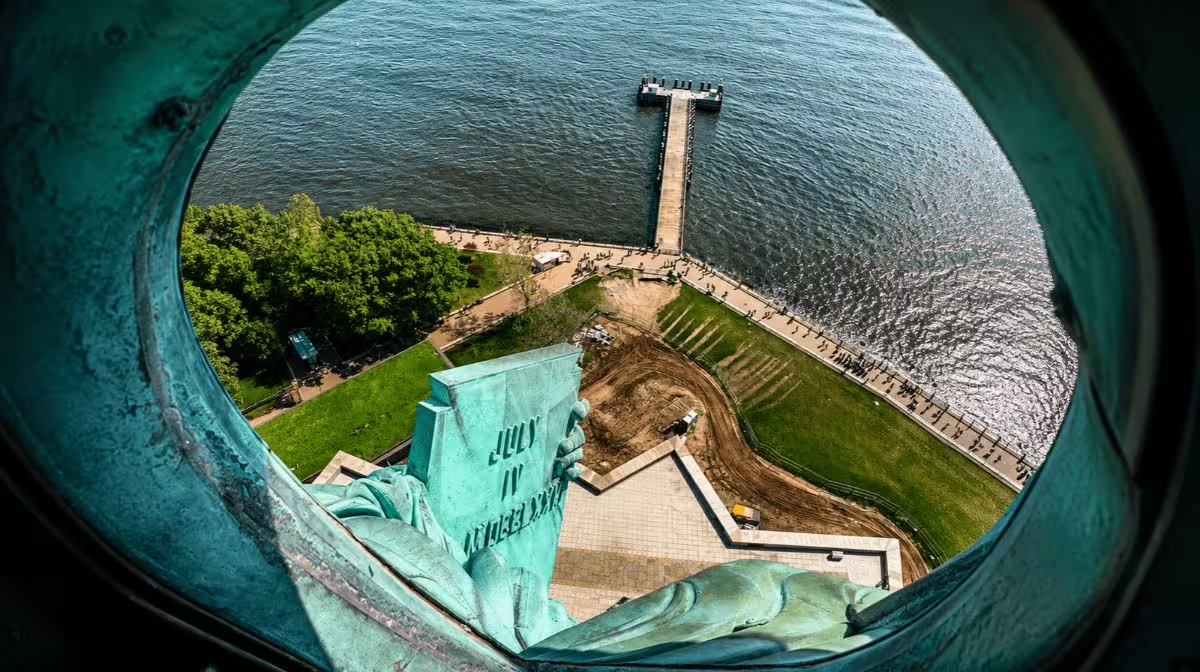
Crown Reserve
Same base price + $0.30 · books out months in advance
The one people actually mean when they say they “climbed the Statue of Liberty.” Crown Reserve tickets include everything the general ticket does, plus a climb of 354 steps total — 162 of them a tight spiral from the pedestal level up into the crown itself, no elevator for that last stretch — ending at 25 small windows behind her seven-spiked halo, looking straight down her outstretched arm toward the torch she’s not allowed to hold visitors near anymore. It is genuinely strenuous, capacity is deliberately tiny to protect the historic structure, and the National Park Service is not exaggerating when it says tickets can sell out months ahead — this is the one thing on this list worth booking before you book your hotel. Visitors must be at least 42 inches tall and able to climb independently; there’s no waitlist and no same-day availability, ever.
I climbed it in July and I’m glad I did — but the staircase is narrower and tighter than photos suggest, and the crown windows are small, so don’t expect a panorama. If the view is what you’re after, the pedestal is honestly the better call. If “I climbed inside the Statue of Liberty” is the goal, this is the only way to earn that sentence.
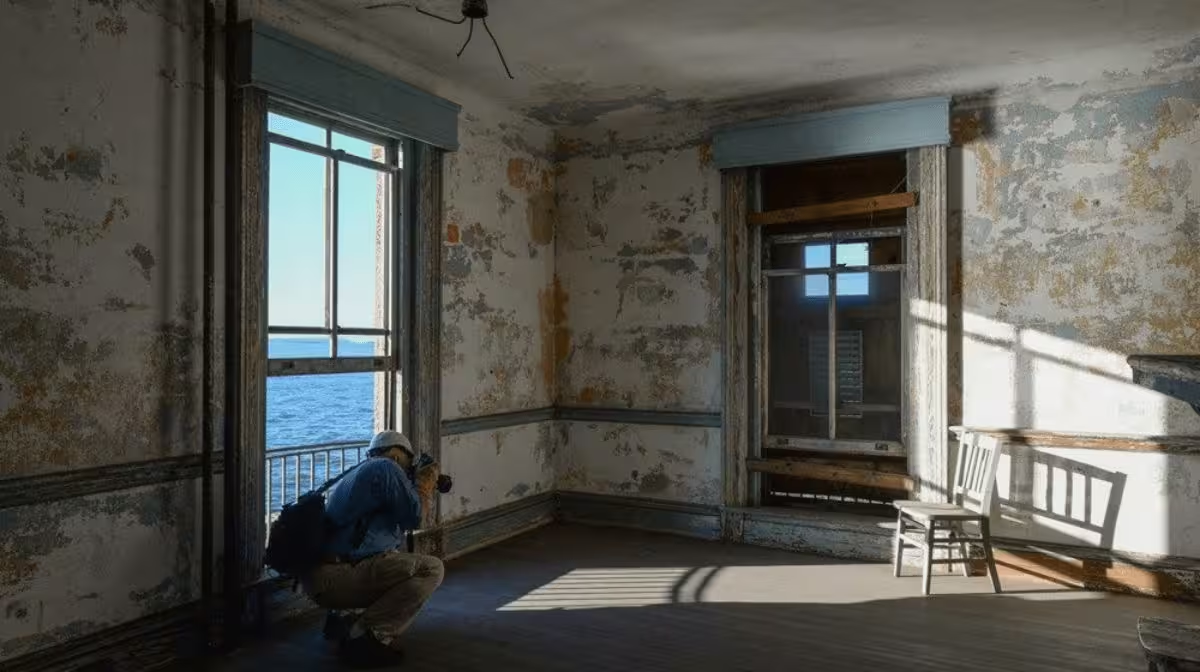
Ellis Island Hard Hat Tour
Reserve ticket + $50 · ages 13 and up only
Most people only see the restored north side of Ellis Island — the Great Hall, the museum. The Hard Hat Tour is a guided walk through the abandoned hospital complex on the island’s south side, where sick and quarantined immigrants were treated (and sometimes never left), left largely untouched since it closed in 1954. It’s not about the statue at all, but if you’re already making the crossing and want something no other ticket on this list gives you, it’s the most atmospheric add-on on the island.
Tickets are sold directly by the Save Ellis Island foundation, not through the general ferry ticket.
Check Hard Hat Tour AvailabilityHelicopter Tour
Roughly $199–$300 per person · 12–20 minutes typical
No lines, no ferry schedule, no security queue — just a short, loud, genuinely thrilling flight from a downtown Manhattan heliport that sweeps past the harbor, gives you the statue from directly above and to the side, and usually loops back over the Financial District skyline before you’ve had time to process it. It’s the most expensive item on this list per minute of statue-viewing, and you won’t set foot on the island, but for a proposal, an anniversary, or someone who’s done the ferry before and wants a completely different angle, it delivers exactly what it promises.
Harbor & Skyline Sightseeing Cruise
Typically $35–$60 per person · 60–90 minutes
If your goal is simply to see her up close and get a great photo — not to walk her grounds — a narrated sightseeing cruise is arguably the most relaxed option on this list. These boats sail right past Liberty Island (some circle it) close enough for a genuinely striking photo of the whole statue against the skyline, usually loop past Ellis Island and under the Brooklyn Bridge too, and need zero advance planning beyond picking a departure time. No security screening, no ferry transfer, no stair climb — just a seat on the water.
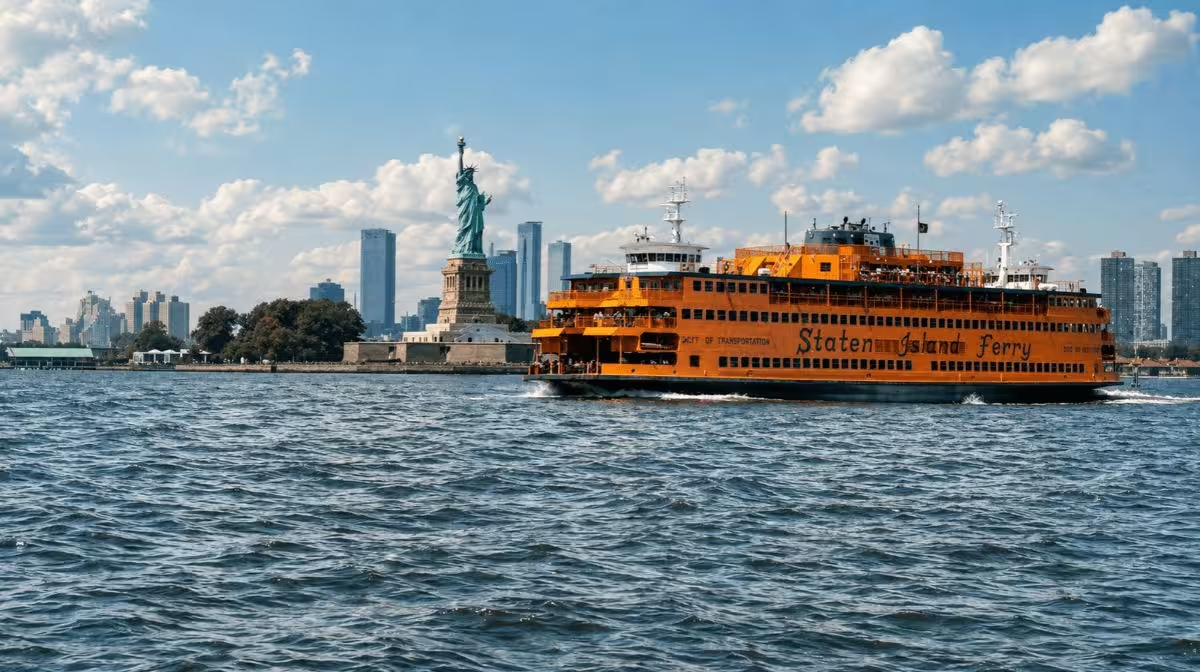
The Staten Island Ferry
$0 · runs 24/7, no reservation, no ticket
New York’s best-kept “secret” isn’t a secret at all — it’s just free, so nobody markets it. The commuter ferry between Whitehall Terminal in Lower Manhattan and St. George Terminal on Staten Island runs around the clock, takes about 25 minutes each way, and passes close enough to the statue for a genuinely good photo, all for the price of walking on board. You don’t get off at Liberty Island and there’s no narration, but for the cost of nothing, it’s hard to beat. Grab the right side of the boat leaving Manhattan (the left side coming back), skip the weekday rush-hour crush, and you’re set.
Battery Park (and Liberty State Park, NJ)
$0 · no ticket, no schedule, no crowd control
You don’t need to be on the water at all. Battery Park, right where the ferries depart in Lower Manhattan, gives you a clean, unobstructed harbor view of the statue in the distance — best around golden hour, when the light catches the copper — and it costs nothing beyond the walk or subway ride to get there. Across the harbor, Liberty State Park in Jersey City offers a similar (arguably closer) free view with the added bonus of the Manhattan skyline as a backdrop behind you.
Evening & Fireworks Cruises
Varies widely · roughly $80–$250+ per person depending on the occasion
She’s lit at night, and a harbor cruise after sunset is a completely different experience from the same route at noon — quieter, cooler, and considerably more romantic, with the statue glowing against a dark harbor and the skyline fully lit behind her. Some operators run dedicated dinner cruises; a handful of seasonal ones (July 4th, New Year’s Eve) build the whole evening around a fireworks display with the statue as the foreground. Worth booking early if you want a specific date — these do sell out.
Ready to Pick Your Crossing?
Whichever way you choose to see her, book the ferry or tour before you land in New York — especially crown tickets, which routinely sell out months ahead.
Check Availability & PricesQuick Comparison
| Option | Cost (adult) | Time needed | Book ahead? | Best for |
|---|---|---|---|---|
| General Reserve (ferry) | ~$25.50 | 3–4 hrs | Days ahead | Most first-time visitors |
| Pedestal Reserve | ~$25.80 | 3–4 hrs | 2+ weeks ahead | Best value upgrade |
| Crown Reserve | ~$25.80 | 4–5 hrs | Months ahead | The full bucket-list climb |
| Hard Hat Tour add-on | +$50 | +45 min | Days ahead | History buffs, ages 13+ |
| Helicopter tour | $199–$300+ | ~1 hr total | Days ahead | Special occasions, no landing needed |
| Harbor sightseeing cruise | $35–$60 | 1–1.5 hrs | Same day usually fine | Great photos, zero hassle |
| Staten Island Ferry | Free | ~1 hr round trip | None needed | Budget travelers, spontaneous stop |
| Battery Park / Liberty State Park | Free | Any | None needed | Sunset views, no time pressure |
Know Before You Go
- Book crown tickets first, plan everything else around them. They’re capped daily to protect the historic structure and are the single most likely thing on this list to be sold out by the time you check.
- Security is airport-style, not a formality. Every visitor lands through a screening facility before boarding — no large bags or backpacks, and lines build fast in peak summer. Arrive at least 30–45 minutes before your ferry slot.
- Pedestal and Crown ticket holders go through a second screening. On top of the main entry checkpoint, there’s a separate security check on Liberty Island itself before you’re allowed up — I found this out first-hand in July. Anything that can’t come inside goes into a locker at that second checkpoint, so travel light on your bag.
- Only one ferry company is authorized to land on the islands. Statue City Cruises is the sole National Park Service–approved operator to Liberty and Ellis Islands. Aggressive third-party sellers do work the crowds near Battery Park — book official tickets in advance rather than from someone with a clipboard on the sidewalk.
- Ferries leave from two points. Battery Park in Lower Manhattan (behind Castle Clinton) and Liberty State Park in Jersey City, NJ — both reach the same islands, so pick whichever side of the harbor is easier to get to.
- The crown climb is real exercise. 354 steps, a tight spiral staircase, no elevator for the final stretch, and a minimum height requirement of 42 inches for anyone entering. Not recommended for anyone with heart, respiratory, or mobility concerns.
- Morning slots are calmer. The earliest ferries of the day mean shorter security lines, cooler temperatures in summer, and softer light for photos of the statue itself.
- Every ferry ticket already includes Ellis Island and its Immigration Museum — don’t book it separately.
Where to Stay in New York
Staying near Lower Manhattan puts you closest to the ferry departure point at Battery Park, which matters most if you’ve got an early Crown or Pedestal slot. Here’s a live map of what’s available and what it costs right now.
More Top New York Experiences
Making the most of the trip while you’re downtown — a few other highly-rated things to do nearby.
Frequently Asked Questions
Do I need a ticket just to see the Statue of Liberty, or only to visit the island?
You can see her for free from Battery Park, Liberty State Park, or the Staten Island Ferry without any ticket at all. A ticket is only required if you want to land on Liberty Island itself.
What’s the actual difference between Reserve, Pedestal, and Crown tickets?
All three include the round-trip ferry, both islands, and both museums. Reserve gets you onto the grounds only; Pedestal adds elevator access to the pedestal’s observation deck about ten stories up; Crown adds the 354-step climb inside the statue itself, all the way up to the windows in her crown.
How far in advance should I book crown tickets?
As early as you can — ideally as soon as your travel dates are set, and at least a few months ahead for summer or holiday visits. They routinely sell out, there’s no same-day availability, and no waitlist.
Can I go inside the torch?
No — the torch has been closed to the public since 1916, after a nearby explosion damaged part of the structure. The crown is now the highest point visitors can reach.
What’s the best free way to see the Statue of Liberty?
The Staten Island Ferry, hands down. It’s free, runs 24 hours a day with no reservation needed, and passes close enough to the statue for genuinely good photos — just sit on the right side of the boat leaving Manhattan.
Is a helicopter tour worth it if I’ve already done the ferry?
If budget isn’t the deciding factor, yes — it’s a completely different perspective (from above, at speed, paired with the full skyline) rather than a repeat of the ferry experience, and it needs no advance planning beyond picking a slot.