 Skip to content

The Palais Garnier is one of the most extraordinary buildings in Paris, yet many visitors only photograph the façade. The real show is inside: a white marble Grand Staircase, a Grand Foyer often compared to the Hall of Mirrors at Versailles, and an auditorium crowned by a Chagall ceiling.
This guide covers the history, what to see room by room, the best tickets and tours, practical tips and where to stay nearby, so you can plan the visit once and book the right thing first time.
In this guide
Palais Garnier at a glance
The building is also known as the Opéra Garnier or the Paris Opera House. Closures can happen for performances, rehearsals and theatre activity, so always check the official schedule before you go.
Self-guided
Paris: Palais Garnier Self-Guided Tour
Explore the Grand Staircase, Grand Foyer and richly decorated halls at your own pace.
Affiliate link: we may earn a commission at no extra cost to you.
A short history of the Palais Garnier
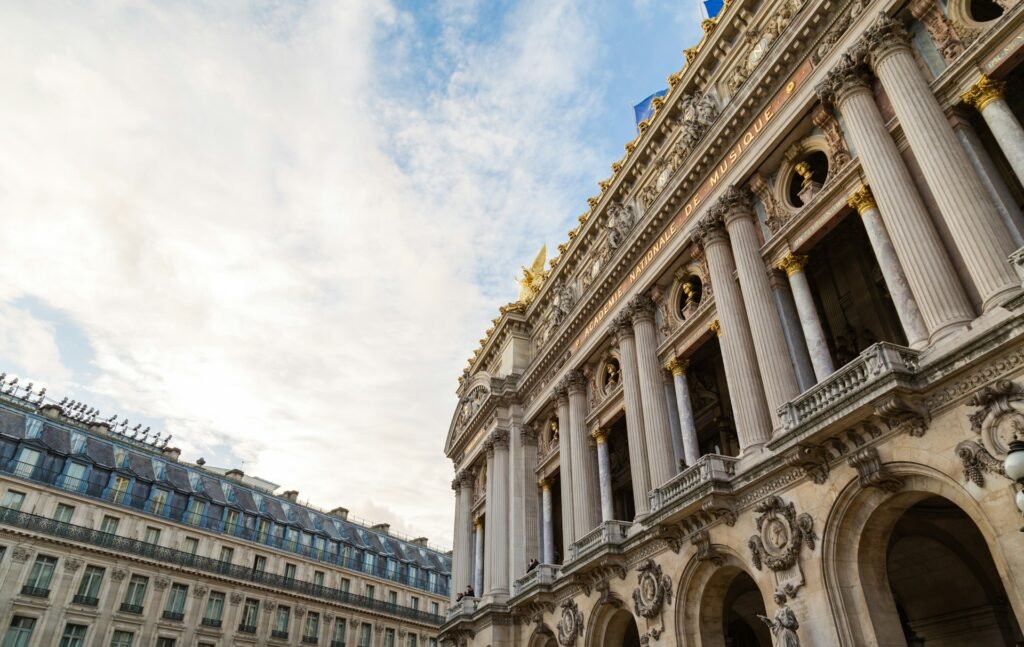
The Palais Garnier is one of the great architectural achievements of the 19th century. It was commissioned by Emperor Napoleon III as part of the grand transformation of Paris during the Second Empire.
The design was chosen through a competition with more than 170 entries, won by a then relatively unknown architect, Charles Garnier. His vision was bold, theatrical and full of detail, mixing Baroque, Renaissance and classical styles into one spectacular building.
Construction began in 1861 and took almost 15 years, with the opera house opening in 1875. It is over 150 metres long and holds nearly 2,000 spectators, which makes it one of the largest opera houses in the world.
Building on ground with a high water table was a challenge, and an underground water tank still sits beneath the building. It is part of the setting for Gaston Leroux’s novel The Phantom of the Opera, which is why the opera house is so closely tied to the legend.
What truly sets the Palais Garnier apart is its opulence. Marble, gold leaf, sculpture and painted ceilings were designed to show off the cultural power of Paris. Many of the large opera productions are now staged at the modern Opéra Bastille, while the Palais Garnier is home to the Paris Opera Ballet and remains one of the most visited landmarks in the city.
What to see inside the Palais Garnier

The exterior is impressive, but the interior is what takes your breath away. Here are the highlights not to miss, in the order most visitors walk them.
1. The Grand Staircase (Le Grand Escalier)

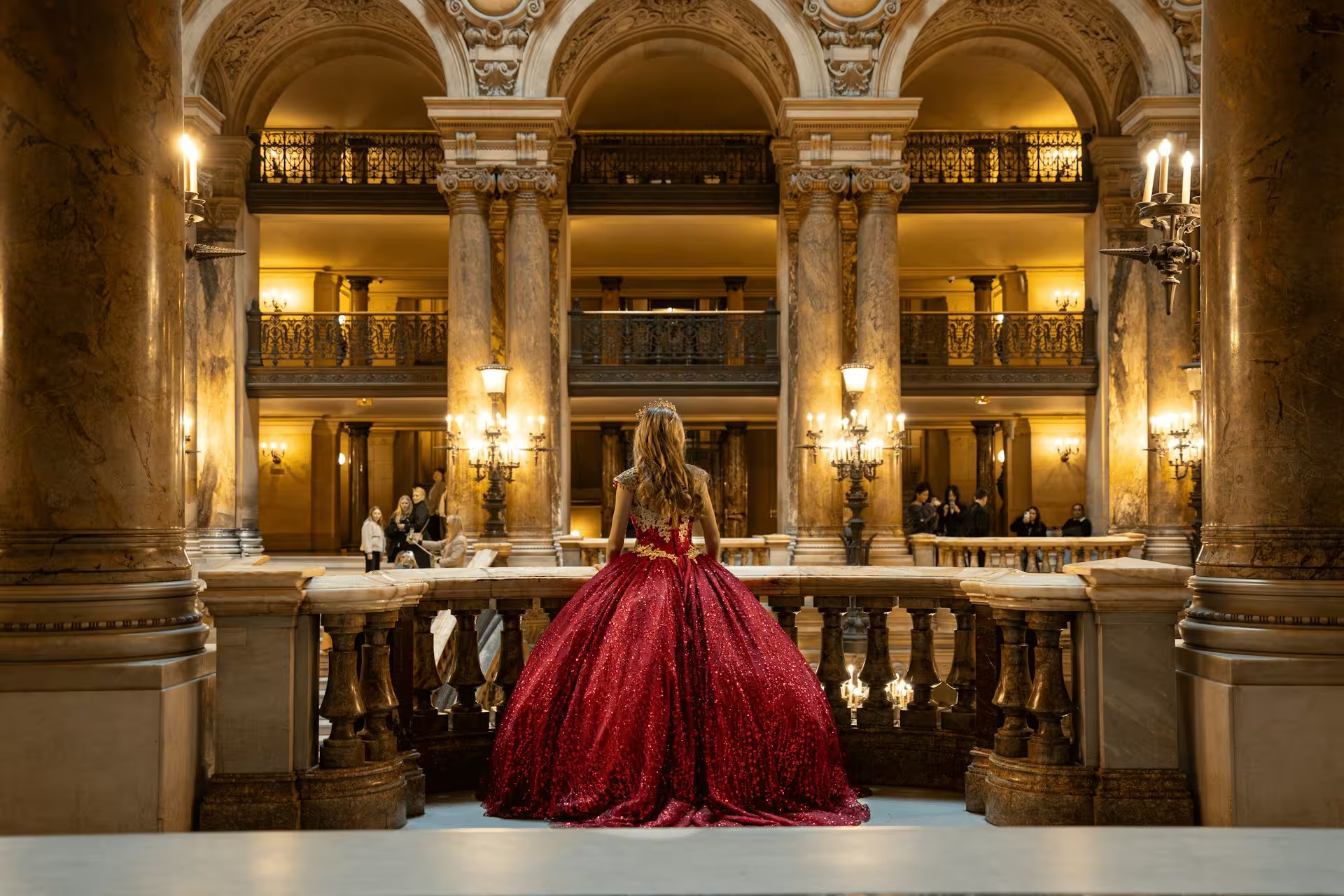
The moment you enter you meet the Grand Staircase: white marble, sweeping curves and dramatic scale. It was designed as much for social display as for getting upstairs, a stage where guests came to see and be seen. Look up to the painted ceilings and the ornate sculptures around you, and stop on the landings, where the views back across the space are the best.
2. The auditorium

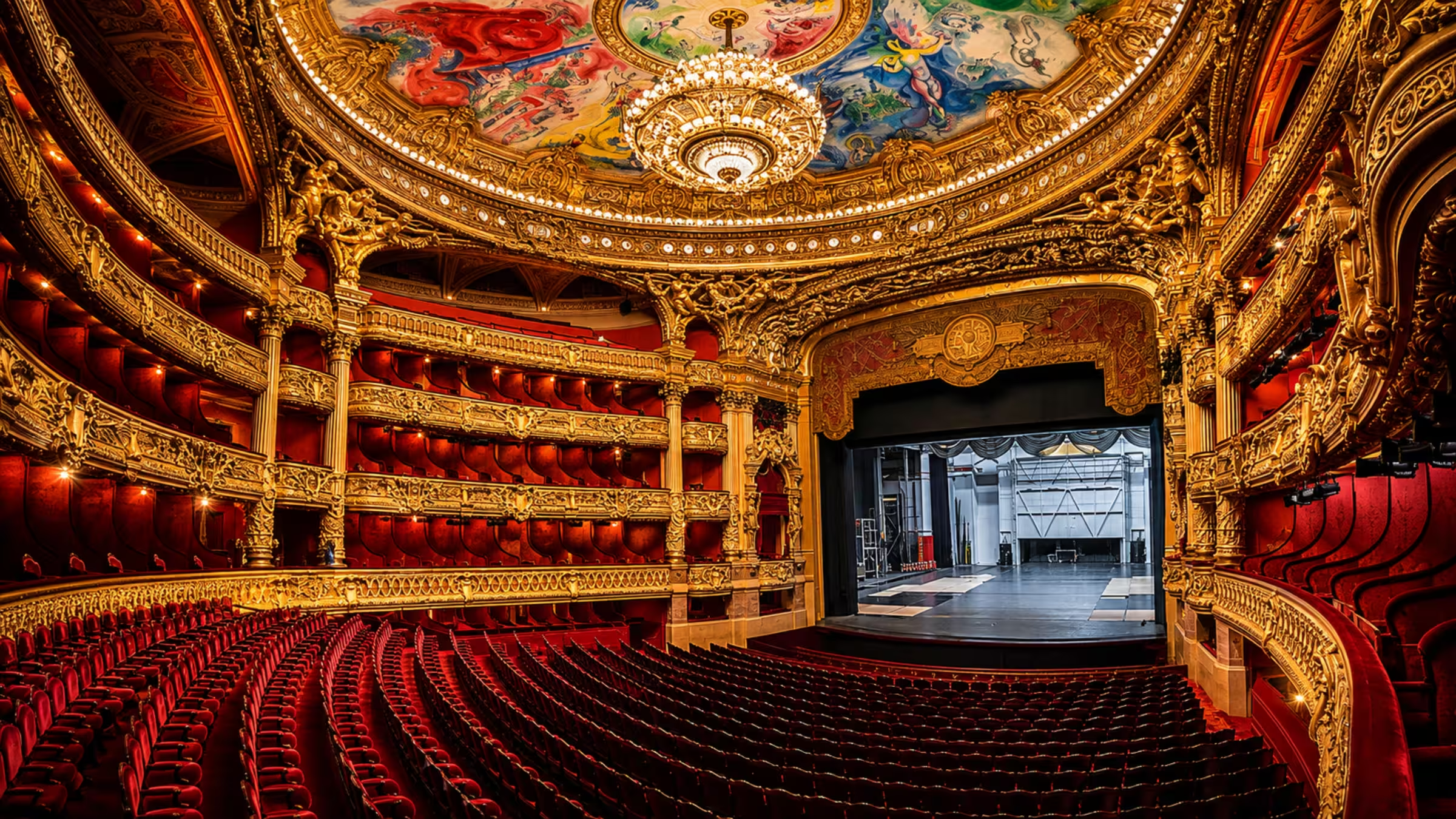
The horseshoe-shaped auditorium is a blaze of red and gold, with a capacity of nearly 2,000 people. Two things dominate: the enormous chandelier, which weighs several tonnes, and the ceiling painted by Marc Chagall in 1964, whose bright colours contrast with the classical decoration below. The auditorium can be closed for rehearsals or performances, so check ahead if it is a priority.
3. The Grand Foyer
Often compared to the Hall of Mirrors at Versailles, the Grand Foyer is one of the most breathtaking rooms in the building. A long gallery of mirrors, chandeliers and gold decoration makes it feel like a palace within a palace. Natural light from the tall windows bounces off the mirrors, which makes it one of the most photogenic spots in Paris.
4. The library-museum
Tucked inside the opera house is a library and museum dedicated to the history of the Paris Opera. It holds thousands of documents, costumes and objects spanning centuries of performance. Even if you are not a history lover, it gives you a deeper sense of why this building matters.
5. The hidden details

Beyond the main rooms, slow down and look at the smaller things: ceiling paintings, sculptures, lyres and gold leaf finishes. The whole building was designed as a work of art, and many visitors say the best part of the experience is simply taking time to look around.
Private tour
Paris: The Most Elegant Private Tour
A private guide brings the history to life, from Napoleon III to the Phantom of the Opera legends, with time for your questions.
Affiliate link: we may earn a commission at no extra cost to you.
Palais Garnier tickets and tours
There are two good ways to visit, depending on how much time you have and how deep you want to go. A standard self-guided visit is enough if you simply want to see the famous interiors. A private tour is the better choice if you love history, architecture and the stories behind the building.
| Option | Best for | What to know |
|---|---|---|
| Self-guided tour | Exploring at your own pace | Flexible and simple. Good if you are short on time or already know a little about the building. |
| Private tour | History, legends and hidden details | A private guide, more personal and relaxed, with room to ask questions and focus on what interests you. |
Both tours are bookable on this page: the self-guided tour near the top and the private tour above.
Tips for visiting the Palais Garnier
- Book in advance. Lines can get long in peak season, and booking online saves time and secures your slot.
- Visit early or late. Right after opening or later in the afternoon tends to be less crowded.
- Look up. Some of the best details are on the ceilings, including the Chagall painting.
- Bring your camera. The Grand Staircase and Grand Foyer are the most photogenic spaces.
- Check for closures. The auditorium in particular can close for rehearsals or performances.
- Travel light. Large bags and suitcases are not allowed inside, so leave them at your hotel.
- Use the right entrance. Visitors enter at the corner of Rue Scribe and Rue Auber, not at the main façade.
- Make it a walk. The Galeries Lafayette Haussmann department store is a short walk away, and its rooftop terrace has views over the city.


Where to stay near the Palais Garnier
The Opéra district is one of the most convenient places to base yourself in Paris. You are on metro lines 3, 7 and 8, close to the department stores, the Tuileries and the Louvre, and a short ride from most major sights. The map below shows hotels in the area with live prices.
Frequently asked questions
Is the Palais Garnier worth visiting?
Yes. It is one of the most beautiful buildings in Paris, and even if you are not attending a performance the interiors alone make it worth the visit: the Grand Staircase, the Grand Foyer and the auditorium with its Chagall ceiling.
Do you need tickets for the Palais Garnier?
Yes, you need a ticket to go inside. You can buy on the day, but booking in advance is recommended to avoid queues and guarantee entry, especially in peak season.
How long does it take to visit the Palais Garnier?
A self-guided visit usually takes 1 to 1.5 hours. Allow longer if you take a guided tour or want to spend time in the library-museum.
Can you go inside the Opéra Garnier?
Yes, visitors can go inside when there are no performances or rehearsals. Most areas are open, although the auditorium is occasionally closed, so check the official schedule before you go.
What are the Palais Garnier opening times?
It is usually open daily from 10:00, with last entry around 4:00pm and closing around 5:00pm. Times can change for performances and events, so confirm on the official website before you travel.
Where is the visitor entrance?
The visitor entrance is at the corner of Rue Scribe and Rue Auber, not at the main façade on Place de l’Opéra. The nearest metro is Opéra (lines 3, 7 and 8) and the nearest RER station is Auber (RER A).
What is the difference between the Palais Garnier and the Opéra Bastille?
The Palais Garnier is the historic 19th-century opera house known for its ornate design and is home to the Paris Opera Ballet. The Opéra Bastille is a modern venue where many of the large opera productions are staged today.
Is the Phantom of the Opera lake real?
Not as a lake you can row across, but there is a real underground water tank beneath the building, a result of the high water table at the site. Gaston Leroux used this setting in his novel The Phantom of the Opera.
What is the best way to visit the Palais Garnier?
It depends on how you like to travel. A self-guided ticket is ideal for exploring at your own pace, while a private tour adds the history, legends and hidden details that are easy to miss on your own.
Can you take photos inside the Palais Garnier?
Yes, photography is allowed in most areas for personal use. Flash photography and tripods may be restricted.
More Paris travel guides
Route & Stay contains affiliate links. If you book through them we may earn a commission at no extra cost to you. Prices, hours and rules can change, so confirm details on the official website before you travel.