 Skip to content

Marseille Travel Guide
France’s oldest city: a working harbour, a hilltop basilica, white limestone calanques and one of the loudest football stadiums in Europe.
This Marseille travel guide covers a port city that has traded, fed and welcomed people for around 2,600 years. It is rougher and more alive than most French destinations, and that is the appeal: a Vieux-Port crowded with fishing boats, the Panier’s steep lanes, a basilica watching over it all, and a coastline of turquoise inlets only minutes from the centre.
Our Marseille travel guide shows what is worth your time, how to get around, the best day trips, where to eat and where to stay, with details checked against the Marseille Tourist Office. Marseille works as a long weekend, a cruise-port day, a football trip built around a night at the Vélodrome, or a southern stop after Paris and Strasbourg.
In this guide
Marseille at a Glance
| Attraction | Time needed | Cost | Book ahead? |
|---|---|---|---|
| Vieux-Port | 1 hour | Free | No |
| Notre-Dame de la Garde | 1 to 2 hours | Free to enter | No |
| Le Panier | 2 hours | Free | No |
| MuCEM | 2 to 3 hours | Paid for exhibitions; the terraces and footbridge are free | Recommended in peak season |
| Château d’If | Half a day with the boat | Boat and entry fee | Recommended in summer |
| Calanques boat tour | 2 to 3 hours | Paid, price set by operator | Yes in summer |
| Stade Vélodrome tour or match | 1.5 hours / 2 hours | Paid | Yes |
Best Things to Do in Marseille
The Vieux-Port
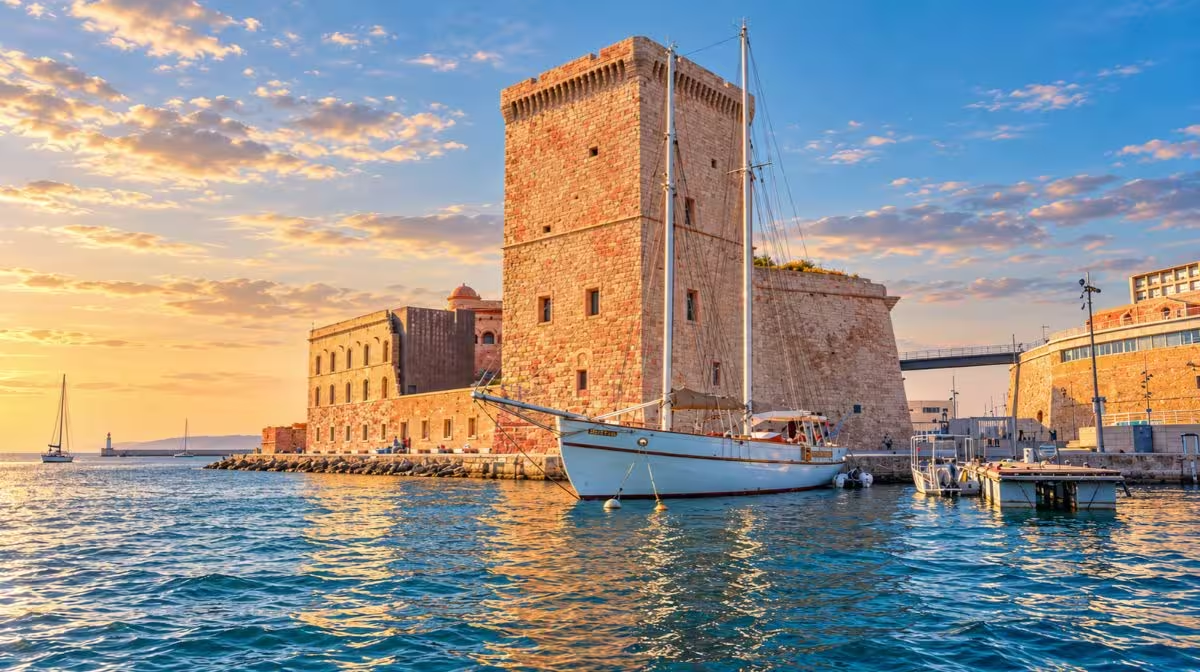
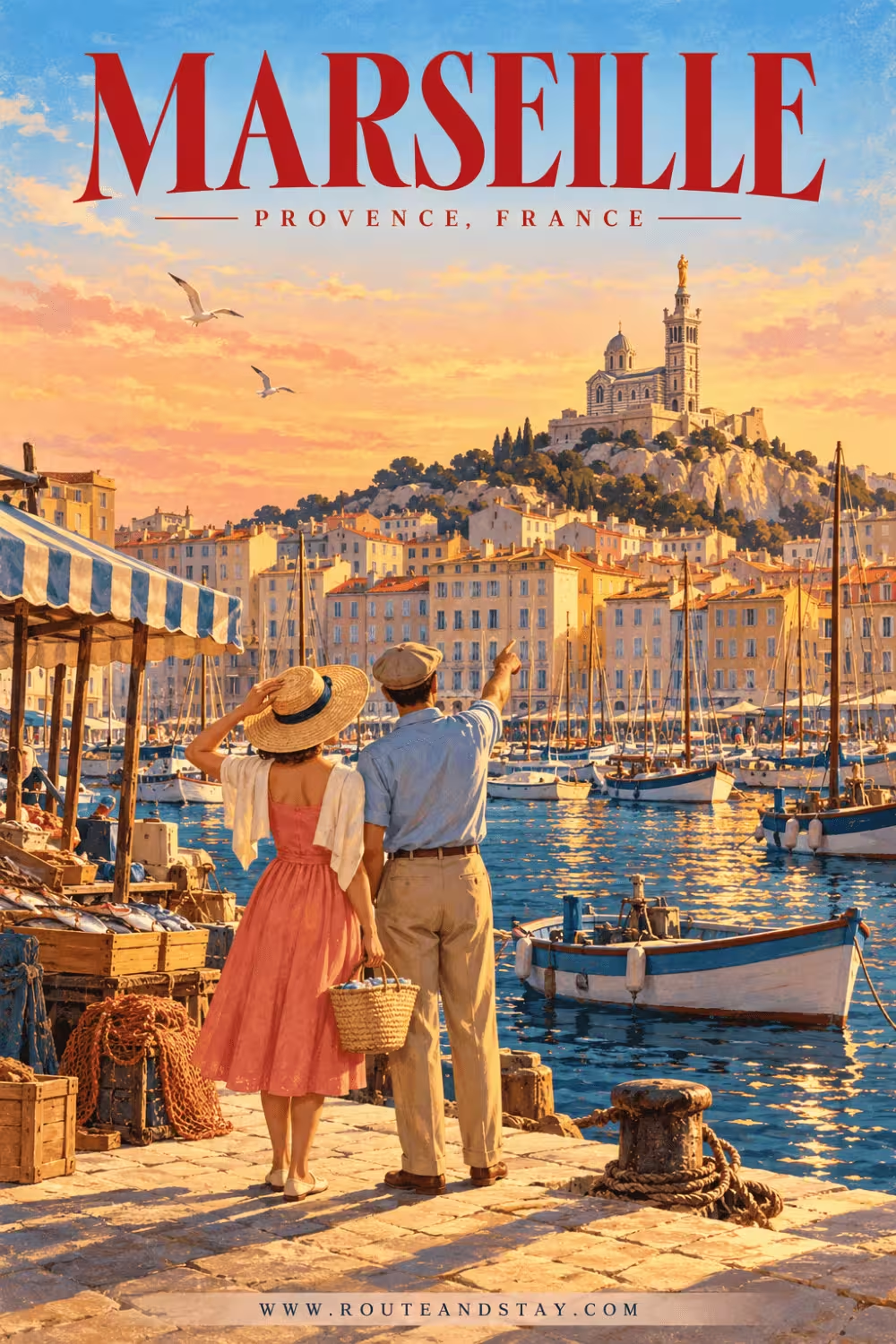
The old harbour is the beating heart of the city, a rectangle of masts ringed by cafés and fish stalls. Its pedestrian quay on the north side is lined with restaurants, and the mirrored canopy, the Ombrière, on the quay is a favourite photo spot. Ferries and boat tours leave from here.
Free to wander. Come at sunrise for fish stalls and at dusk for the lights on the water.
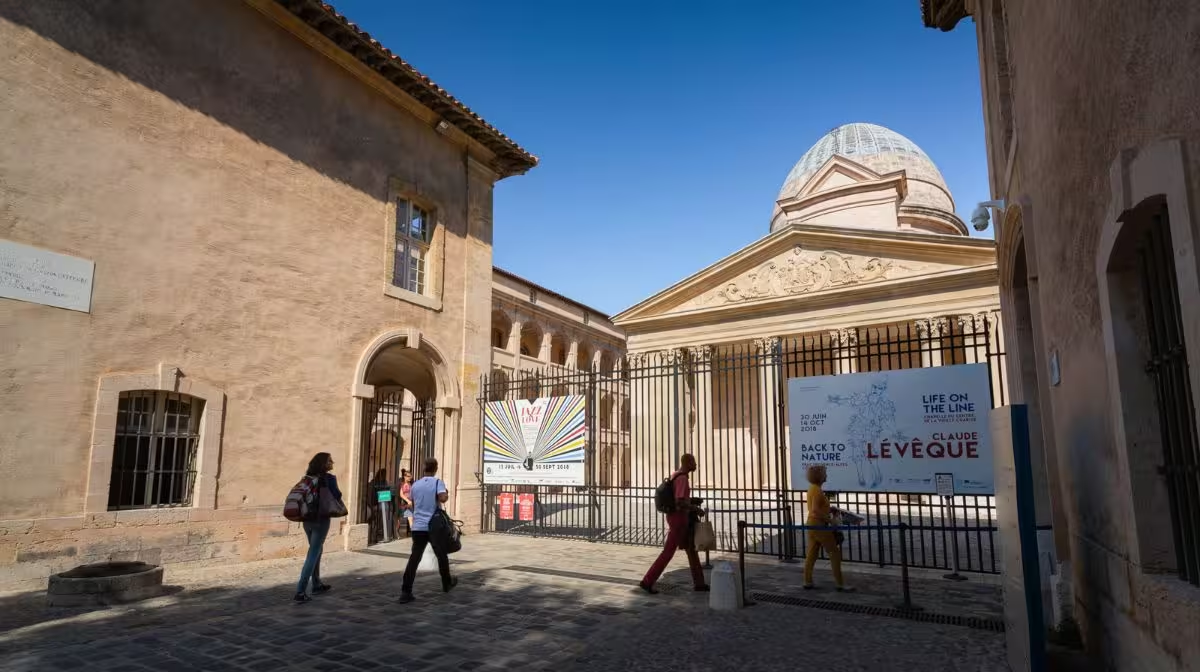
Le Panier
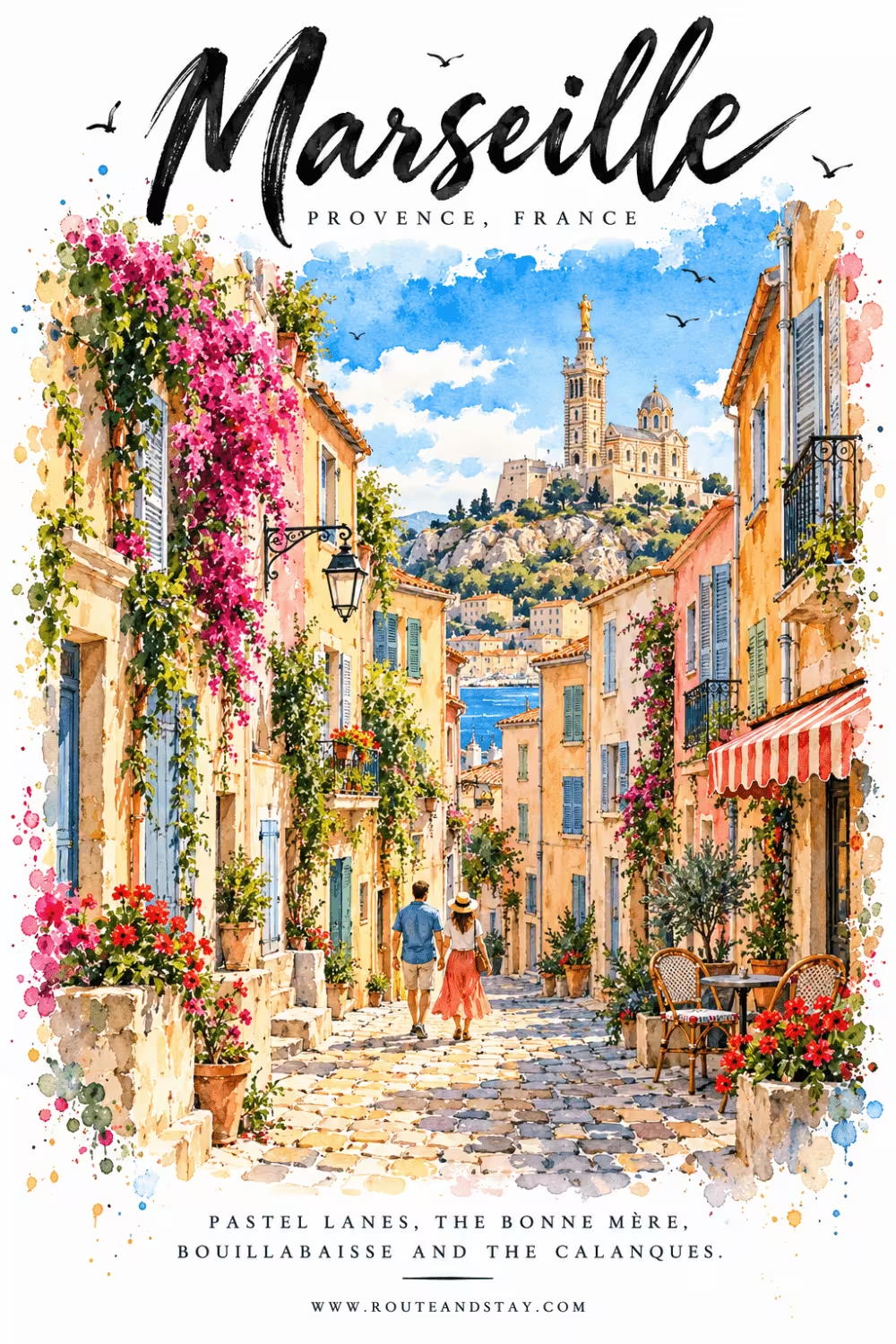
The city’s oldest quarter climbs the hill north of the Vieux-Port, a tangle of narrow lanes, pastel shutters, street art, small galleries and workshops. Visit the Vieille Charité, a restored 17th-century almshouse with a graceful arcaded courtyard. Wander without a plan and stop for coffee on a small square.
Free to explore. The lanes are steep and cobbled, so wear flat shoes.
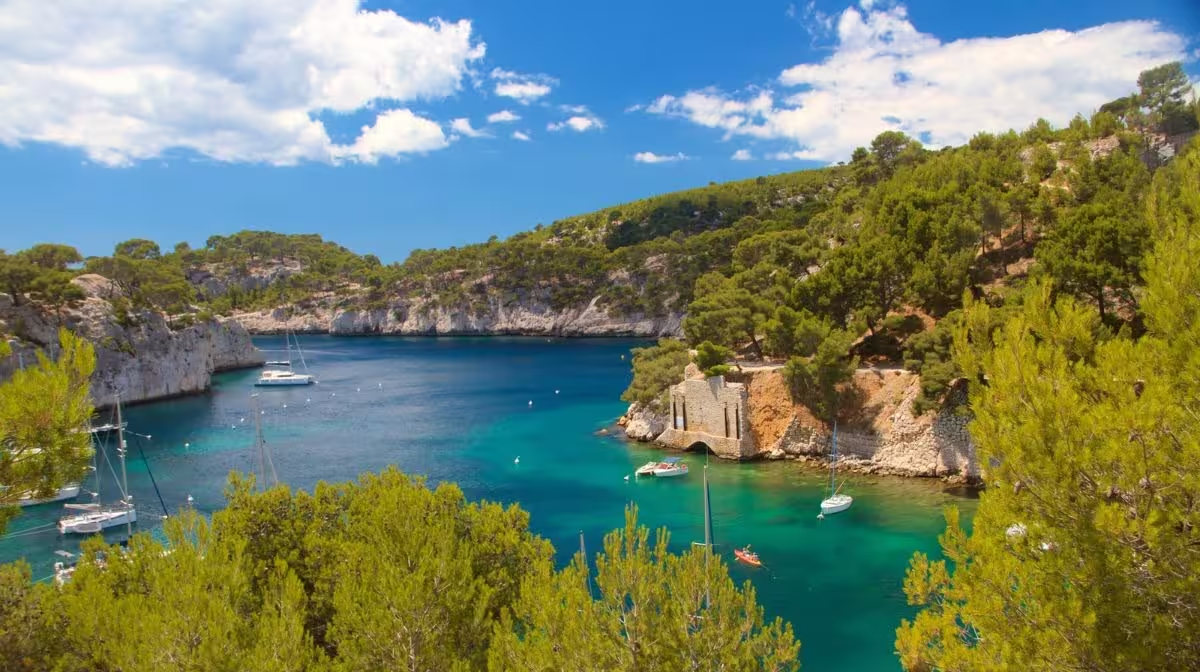
The Calanques
The Calanques National Park starts just south of the city: white limestone cliffs dropping into turquoise inlets. A boat tour from the Vieux-Port is the easy way to see them, with a swimming stop on many routes. Walking routes are reserved for fit visitors with water and proper shoes.
Book boat tours ahead in summer. Check the Calanques National Park website for walking access rules and reservations.
Notre-Dame de la Garde
“La Bonne Mère” is the basilica on the hill that watches over Marseille, topped by a gilded Madonna. The climb is steep, so take the bus or the tourist train if you prefer. Inside, the Byzantine-style interior is worth a look, but the real reward is the panoramic view over the harbour, the islands and the city. It is free to enter.
MuCEM and Fort Saint-Jean
The Museum of European and Mediterranean Civilisations opened in 2013, an open-lattice cube linked by a high footbridge to Fort Saint-Jean at the harbour mouth. The terraces and the footbridge are free and give a superb view, even if you skip the exhibitions. See the MuCEM website for opening hours and tickets.
Château d’If and the Frioul Islands
A short boat ride from the Vieux-Port reaches the island fortress made famous by The Count of Monte Cristo. The nearby Frioul Islands have rocky coves and walking paths for a quieter half day by the water.
Vallon des Auffes and the Corniche
The Corniche Kennedy follows the sea cliffs south of the centre. Stop at the Vallon des Auffes, a tiny fishing cove under a bridge with seafood restaurants on the water. It is one of the most photogenic corners of the city, best at sunset.
Cours Julien and Palais Longchamp
Cours Julien is the street-art and bar district, with a lively evening scene and plenty of casual places to eat. The Palais Longchamp, a grand 19th-century fountain monument with museums and gardens, makes a quiet contrast.
Book Guided Experiences in Marseille
Harbour cruises, Calanques boat trips and city walks, with free cancellation on many options. Availability is live.
Football at the Stade Vélodrome
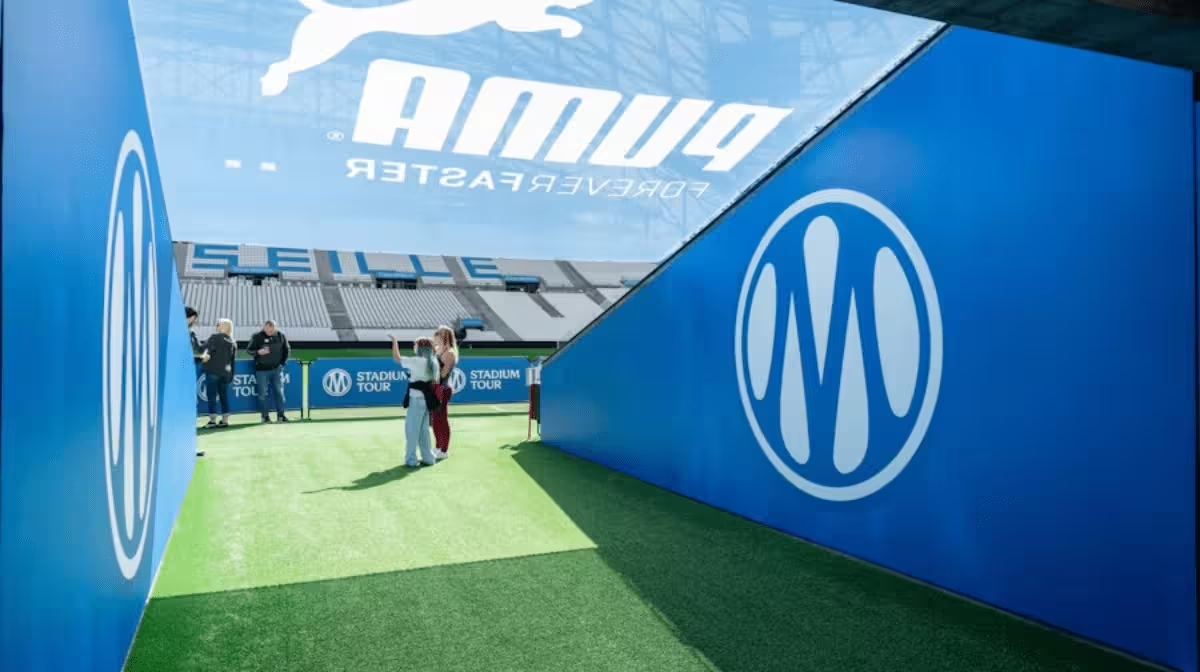
A 67,000-seat cauldron
Olympique de Marseille play at the Stade Vélodrome, a 67,000-seat bowl in the 8th arrondissement that was rebuilt for Euro 2016. Its roof traps the noise, and the supporters in the two Virage stands sing, wave flags and light flares through much of the match. OM were founded in 1899, have won nine Ligue 1 titles and are the only French club to have won the Champions League.
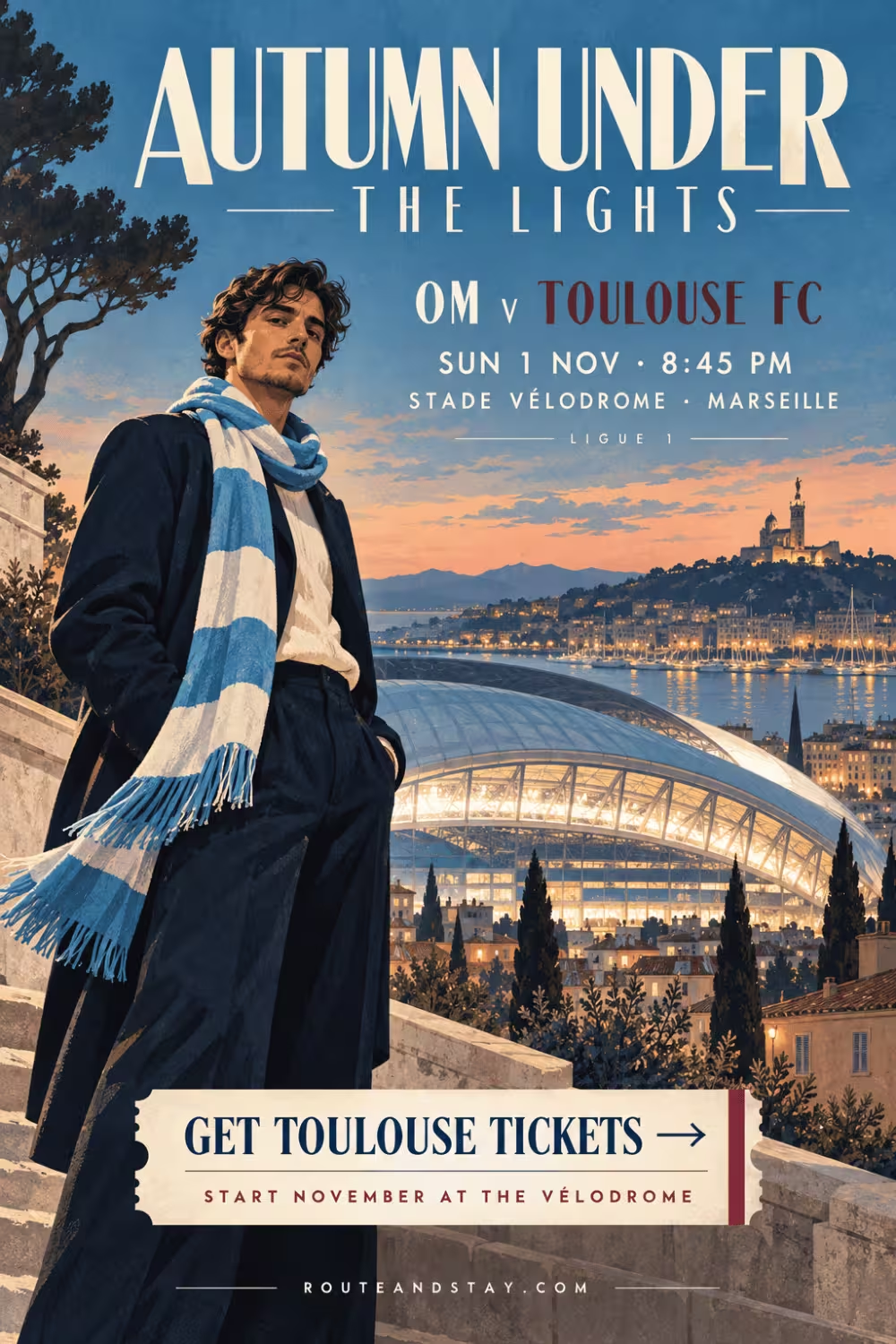
If your dates are flexible, build the trip around a home game. For 2026/27 the biggest fixtures include the Olympico against Lyon on 21 March, Nice on 5 December and Monaco on 13 March. The stadium is on metro Line 2, so staying near the Vieux-Port or in the Castellane and Prado area makes match day easy.
Read our OM tickets guide →OM Stadium Tour and Match Experiences
No match on your dates? A behind-the-scenes tour of the Vélodrome is the next best thing.
Eating and Drinking in Marseille

Bouillabaisse, panisse and the Panier
Marseille’s signature dish is bouillabaisse, a saffron-scented stew of Mediterranean rockfish that is served in two stages, the broth first and then the fish. A traditional version is expensive and usually needs to be ordered ahead, so choose a restaurant that follows the local charter and ask when you book.
For cheaper bites, try panisse, crisp chickpea-flour fries, fresh seafood around the Vieux-Port, and oursinade in winter when sea urchins are in season. Sweet tooth? Look for navettes, small boat-shaped biscuits flavoured with orange blossom. Locals drink pastis as an aperitif.
Book bouillabaisse a day ahead. Many restaurants close on Sunday evening or Monday, so check opening days.

Marseille Food Tour
A guided tasting walk through Marseille’s food, markets and neighbourhoods, an easy way to try the city without guessing what to order.
Check availability on Viator →More Food and Drink Experiences
Tasting walks and market visits in Marseille.
Day Trips from Marseille
Cassis
A pretty fishing port about 30 minutes away by train and shuttle bus, backed by Cap Canaille and the gateway to the best-known calanques such as En-Vau. Boat trips run from the harbour. Check the current train and bus connections before you go.
Aix-en-Provence
Cézanne’s elegant university town is roughly 30 to 40 minutes away by bus or train, with plane-tree boulevards, fountains and a Saturday market. It is the easiest cultural contrast to Marseille’s harbour grit.
Château d’If and the Frioul Islands
The shortest boat trip from the Vieux-Port, ideal for a half day. Combine the fortress with a swim or a walk on the Frioul archipelago.
Cité Radieuse
Le Corbusier’s concrete housing block is an icon of modern architecture, reached by metro and bus. Guided visits and a rooftop terrace are available at set times, so check before you go.
Day Trips and Tours from Marseille
Small-group trips to Cassis, Aix-en-Provence and the Calanques.
Getting to and Around Marseille
From Marseille Provence Airport
Take the A1 bus to Gare Saint-Charles, the main train station, then change to the metro for the Vieux-Port. Taxis are the other option. Check current timetables and prices on the airport website before you travel.
By train and road
Gare Saint-Charles has high-speed TGV services from Paris, Lyon and Nice, with regional trains to Cassis, Aix-en-Provence and the coast. A car is unnecessary in the city, since parking is difficult and traffic is heavy, but it helps for exploring the wider Provence region.
Around the city
The RTM network of metro, tram and bus is simple to use. A single ticket covers bus, metro and tram for up to an hour, and day passes are available. Metro Line 1 connects the station to the Vieux-Port, and Line 2 runs to the Vélodrome. Check fares on the RTM website before you travel.
Best Time to Visit Marseille
Marseille has a Mediterranean climate with hot, dry summers and mild winters. April to June and September to October are the sweet spot for walking, boat trips and the coast, with warm sea in early autumn. July and August are the hottest and busiest months, and Calanques walking access is restricted on high fire-risk days. Winter is quiet and mild, a good time for food and football, though the occasional mistral wind can feel cold.
Match days at the Vélodrome change the feel of the city, so if you want a quiet hotel night, check the fixture list before you book. Planning a longer France trip? Pair Marseille with Paris or the Strasbourg Christmas markets using our France travel guide.
Two-Day Marseille Itinerary
Harbour, Panier and the Bonne Mère
Start at the Vieux-Port, then walk up through Le Panier and the Vieille Charité. Lunch on panisse and seafood, then cross the MuCEM footbridge and head up to Notre-Dame de la Garde for sunset over the harbour. Finish with bouillabaisse or an evening in Cours Julien.
Calanques or the Vélodrome
Take a morning boat tour along the Calanques with a swim, then spend the afternoon on the Corniche and at the Vallon des Auffes. On a match day, swap the afternoon for the Vélodrome and an evening game, using Metro Line 2.
Where to Stay in Marseille
For a first visit, stay near the Vieux-Port for restaurants, the harbour and the main sights on foot, with the metro linking you to the stadium and station. The Castellane and Prado area is closer to the Vélodrome and has a direct Line 2 ride on match days. Le Panier is atmospheric but steep, and the area around Gare Saint-Charles is convenient for trains but less charming. Book early for the Olympico, Europa League nights and summer weekends.
Hôtel C2
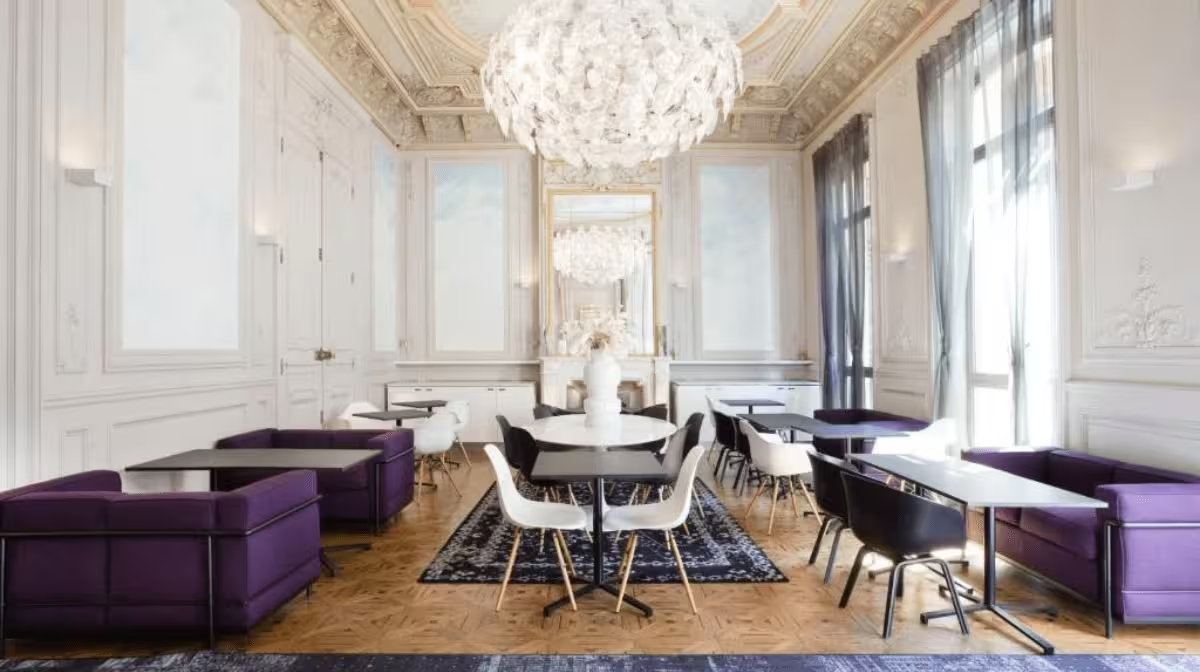
A five-star boutique hotel between the Vieux-Port and Notre-Dame de la Garde, with a small spa, a heated pool, hammam and jacuzzi, and a lounge bar opening onto a patio garden. Estrangin-Préfecture metro station on Line 1 is about 400 metres away, and you change at Castellane for Line 2 to the stadium.
Check availability
Paris Travel Guide
Eiffel Tower, Louvre, Versailles, Seine cruises and where to stay.
Open the guide →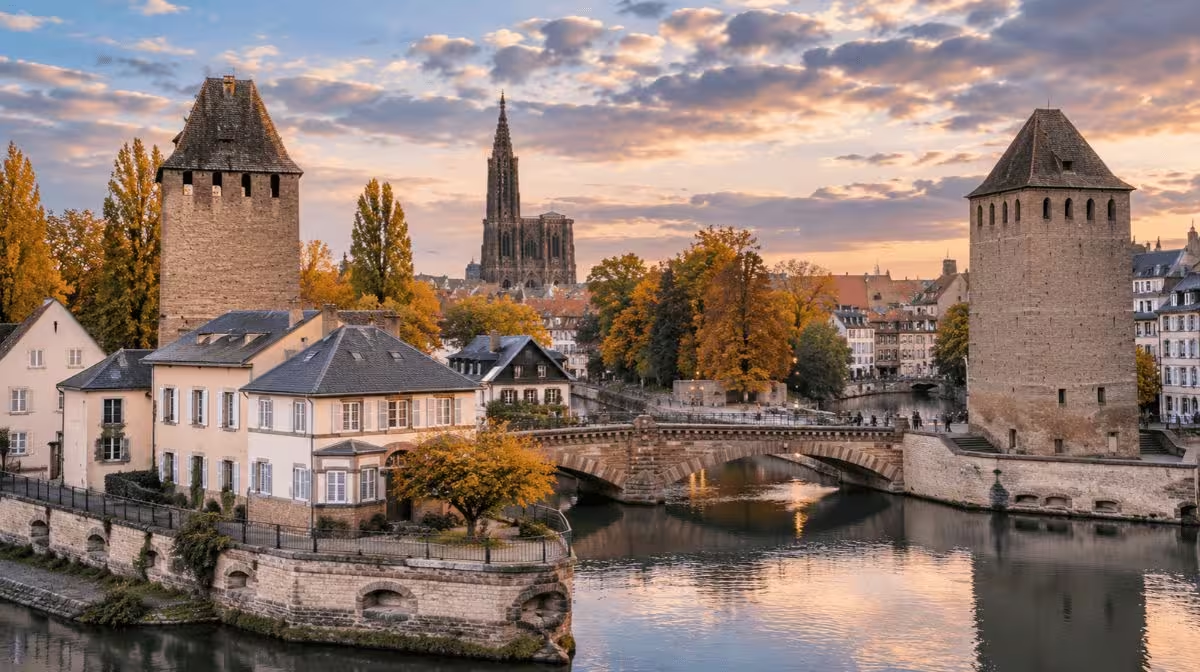
Strasbourg Travel Guide
Cathedral, Petite France, Alsatian food and the Colmar day trip.
Open the guide →
Christmas Market Dates in Europe
Opening dates for the major markets, including Strasbourg and Colmar.
See the dates →Football in France: Marseille tickets · PSG tickets · Lyon tickets · Monaco tickets · Ligue 1 hub
Marseille FAQ
How many days do you need in Marseille?
Two days covers the Vieux-Port, Le Panier, Notre-Dame de la Garde and the MuCEM. Add a third day for a Calanques boat trip or Cassis, and a fourth if you are fitting in a match at the Vélodrome.
Is Marseille safe for tourists?
Yes, the main visitor areas are busy and well used, including the Vieux-Port, Le Panier, the Corniche and the MuCEM. As in any big port city, keep an eye on bags in crowded spots and around Gare Saint-Charles, and take taxis or the metro rather than walking quiet streets late at night.
How do I get from Marseille Airport to the city?
Take the A1 bus from Marseille Provence Airport to Gare Saint-Charles, the main station, then change to the metro for the Vieux-Port. Taxis are the other option. Check the current operator and timetable before you travel.
Do I need to book the Calanques?
A boat tour from the Vieux-Port needs only a seat, so book ahead in summer. Walking into the most popular calanques, such as Sormiou and Sugiton, is restricted in the high fire-risk summer season, and some access needs a reservation, so check the national park’s official site before you go.
What is Marseille famous for eating?
Bouillabaisse, the fish stew that has its own charter, plus panisse chickpea fries, fresh seafood around the Vieux-Port and the orange-blossom navette biscuit. Pastis is the local aperitif.
Can I combine Marseille with a football match?
Yes. The Stade Vélodrome is on metro Line 2, and our OM tickets guide lists every 2026/27 home game from 1 November to 29 May, including the Olympico against Lyon on 21 March.
Is Marseille a good cruise port?
Yes. Marseille is one of the busiest cruise ports in the Mediterranean, and the Vieux-Port, Le Panier and Notre-Dame de la Garde can all be reached from the terminals by taxi, shuttle or public transport in a day.
More of France
Heading to Paris or Strasbourg as well? Our France hub links every French city guide in one place.
Open the France Guide